

IT service management (ITSM) is increasingly important in today’s — and tomorrow’s — digital world.
Do either of these scenarios sound familiar?
- You want to implement ITSM automation, but feel like there are too many hurdles in the way.
- You wish you could improve the ITSM system that you have, whether it’s self-managed, or just not meeting expectations.
If yes, you’re not alone.
In a recent survey of IT professionals, commissioned by Cprime and Appfire, we discovered that less than half of organizations surveyed have implemented automation in their ITSM processes — and a staggering 76% of organizations aren’t completely satisfied with their ITSM processes.
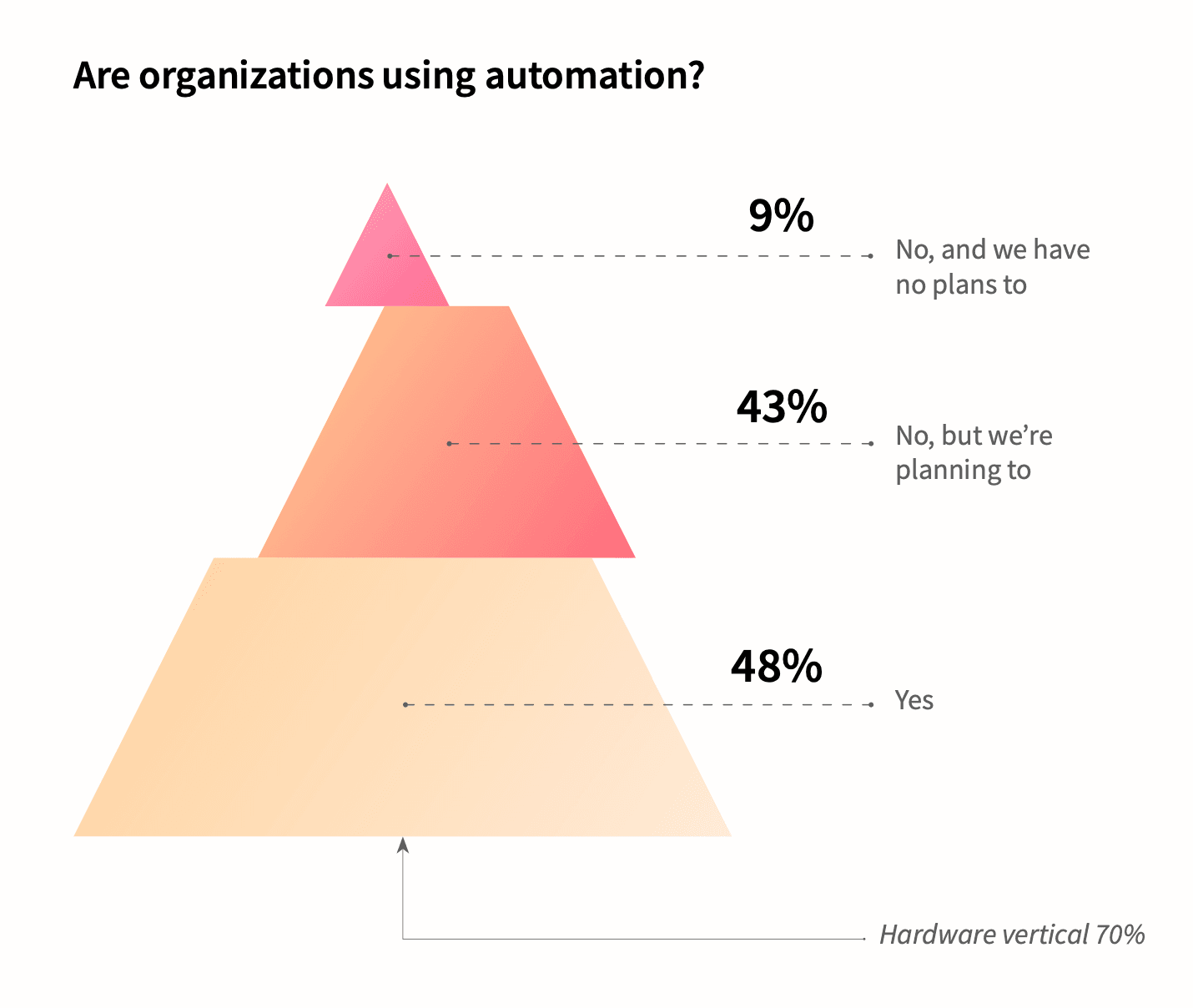
A potential cause of this dissatisfaction may be the lack of ITSM automation. Automation can offer cost savings, increased efficiency, and reduced resolution times when implemented correctly — but less than half of the organizations surveyed have implemented it (although 43% say they plan to automate in the future).
According to survey respondents, the top obstacles to adopting ITSM automation are:
- The need to train employees on new processes
- A general lack of knowledge and expertise
- The complexity and time required for implementation
Another common problem: 28% of IT professionals surveyed reported that the C-suite doesn’t fully understand how ITSM supports overall business strategy. If leadership at your organization doesn’t see the value in ITSM, especially automation, getting resources to optimize your processes or build your tech stack could be difficult.
The good news is that now is the perfect time to build buy-in and support for ITSM automation across your organization. Industry changes brought about by the COVID-19 pandemic and widespread market uncertainty have accelerated digital transformation initiatives, making resilient ITSM practices — especially those automated — more important than ever.
For one thing, the widespread shift to remote work has increased security vulnerabilities. Businesses need to take new measures to address complex ITSM requirements across distributed teams.
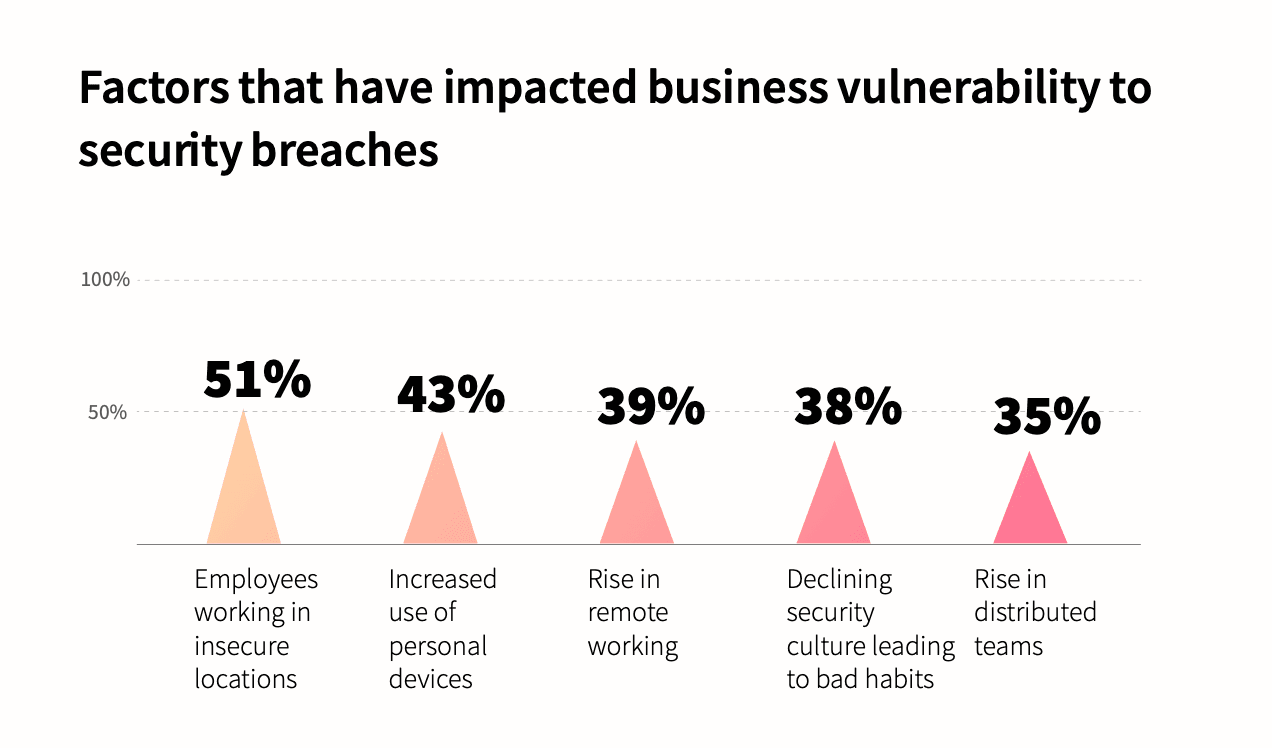
In the new survey from Appfire and Cprime:
- 51% of respondents said they believed that the rise of employees working in unsecured locations has increased their business’s vulnerability to security breaches
- 43% indicated that the increased use of personal devices has increased their organization’s vulnerability to security breaches
Remote work and distributed teams are here to stay, and security concerns will only grow as time goes on. Smart IT leaders are looking at new software and new hardware, emphasizing Configuration Management Database (CMDB), asset management, and, automation to reduce risks associated with human error.
But IT leaders’ concerns go beyond security vulnerabilities: 29% of surveyed respondents cited inconsistent service delivery processes across teams and timezones as a significant drawback of distributed teams.
In IT, consistent service is key: service level agreements (SLAs) being met, efficiency, and incident resolution times shouldn’t depend on where a team member is located. By investing in ITSM automation and establishing clear SLAs, businesses can ensure consistent service delivery regardless of geography.
So, what steps should you take to improve or implement ITSM at your organization? You’ll find them in the full research report. But the first step is to evaluate your current ITSM processes with a critical eye. Focus on making your ITSM more customer-centric and automated if you want to improve customer satisfaction and retention. And don’t get discouraged if you identify a lot of problems: it’s easier than you think to overcome the obstacles between your organization and optimal ITSM.
The important part is to start.
ITSM is changing. Learn the risks, explore the opportunities, and get 10 action steps for evolving your company’s ITSM processes: Download your free copy of the report from Cprime and Appfire on “The Future of ITSM: Navigating industry change with confidence.”