

Sprint Reviews are meant to drive inspection and adaptation, but many turn into status updates. When teams lack shared context about goals, dependencies, and what comes next, the meeting struggles to create real learning and alignment.
TL;DR
- Most Sprint Reviews turn into demos, when they could be delivering much more value
- Real Sprint Reviews inspect the working increment and update the backlog
- Teams get better results when stakeholders can share input before shipping
- Sprint Reviews work better when teams can see how the increment connects to goals and upcoming work
- BigPicture helps teams show progress, context, and next steps inside Jira
Why many Sprint Reviews fail to create real learning
Sprint Reviews often turn into quiet demos
You have probably been in one of these meetings. The Sprint Review is on the calendar. Everyone joins. Someone shares a screen. A few people walk through completed work while the rest half-listen. There is little discussion, no real feedback, and no mention of what did not get done.
The meeting ends. Technically, the team reviewed the sprint. Nothing changes.
Sprint Reviews are meant to be working sessions. They help teams inspect the increment, adjust the backlog, and decide what comes next. But when the review focuses only on showing completed work, teams lose the opportunity to learn from what they built.
One reason this happens is that the room lacks shared context. Stakeholders can see what was finished, but not how the increment connects to broader goals, dependencies, or upcoming decisions. Without that context, feedback stays shallow and adaptation gets delayed.
When Sprint Reviews turn into status updates or polished demos, the purpose of the meeting can get lost.
Demo meeting | Sprint Review |
|---|---|
One-way presentation | Collaborative working session |
Little or no discussion | Active input from team and stakeholders |
Focus on showing completed work | Focus on what the increment means for the product |
No updates to the backlog | Backlog is updated in the meeting |
Stakeholders react after shipping | Stakeholders influence next steps early |
What a Sprint Review is in Scrum and what it is not
The purpose of a Sprint Review in Scrum
A Sprint Review is a collaborative working session focused on understanding what the team learned during the sprint and deciding how that learning should influence what comes next. It is not a presentation or a sign-off meeting.
The review happens at the end of the sprint and includes the team, the Product Owner, and invited stakeholders. Everyone looks at what was completed, shares feedback, and discusses how the backlog should change based on what they learned.
What makes this session effective is not the walkthrough itself, but the conversation that follows. The increment provides a concrete reference point so teams and stakeholders can talk about whether the work solves the right problems, supports current goals, and should change direction before the next sprint begins.
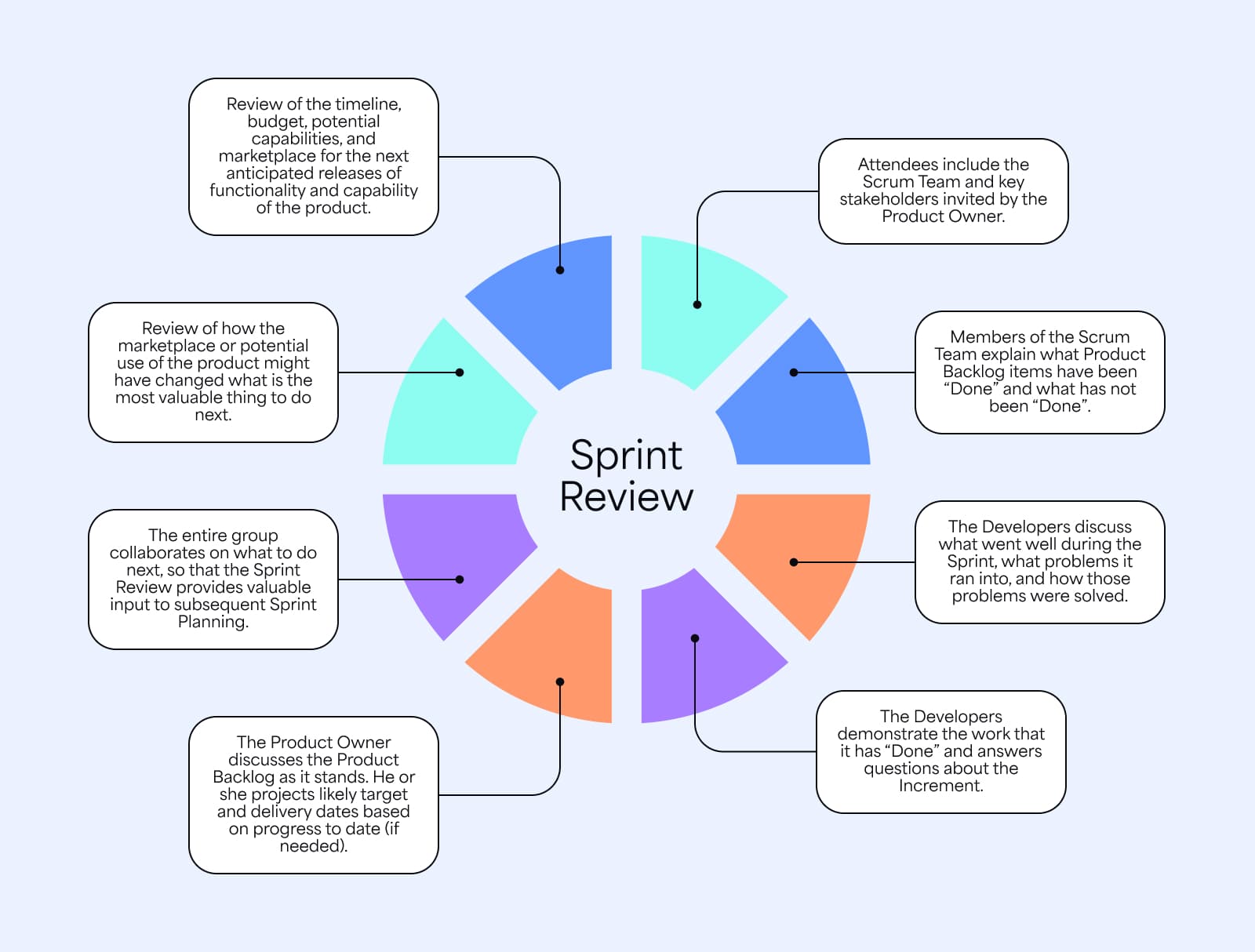
Teams often confuse Sprint Reviews with other meeting types because the format can look similar on the calendar. A Sprint Review has a specific job. It exists to turn real work into shared understanding and backlog decisions.
Here is how it compares to common misconceptions.
Meeting type | Is it a Sprint Review? | Why or why not |
|---|---|---|
Status update | No | Reviews focus on inspecting real work rather than reporting progress. |
Demo | No | The goal is interaction and input, not one-way presentations. |
Sprint Retrospective | No | Retros focus on the team’s process. Reviews focus on the product. |
Final presentation | No | The increment does not need to be perfect. It only needs to be examined. |
Collaborative product review | Yes | This is the intended purpose of a Sprint Review. |
What a successful Sprint Review produces
A successful Sprint Review ends with shared understanding. The team and stakeholders align on what the increment revealed, update the backlog, and agree on what to do next.
This alignment matters because it prevents teams from carrying assumptions into the next sprint. When everyone leaves the review with the same understanding of priorities and risks, decisions in the following sprint become easier and more grounded.
The review does not just close the sprint. It shapes the work that follows.
What teams gain when Sprint Reviews work in Scrum
When a Sprint Review functions as intended, it changes how teams move into the next sprint. Stakeholders see the real state of the product, not just a list of completed items. Developers get feedback they can act on immediately, while the work is still fresh. Product Owners adjust the backlog based on what was learned, not on assumptions made weeks earlier.
This shortens the distance between learning and decision-making. Instead of carrying unanswered questions or unclear priorities into the next sprint, teams leave the review with a clearer sense of what should change and why.
When Sprint Reviews work, teams often see these outcomes:
- Stakeholders share input early, while changes are still inexpensive to make
- The Product Owner adjusts priorities based on real discussion, not post-hoc reactions
- The team understands how the sprint connects to broader goals instead of working in isolation
- Everyone leaves knowing what comes next, not just what is finished
A productive Sprint Review does more than close a sprint. It reduces rework, prevents misaligned priorities, and gives the next sprint a clearer starting point. Teams spend less time revisiting decisions and more time building on what they just learned.
Common Sprint Review mistakes and how to fix them
Even when teams want their Sprint Reviews to be useful, familiar habits can get in the way. These patterns can feel efficient in the moment, but they quietly reduce learning and delay better decisions.
Below are common Sprint Review mistakes and what changes when teams address them.
Mistake: Treating the review like a one-way demo
When the team only walks through completed work, the review turns into a status update. Stakeholders see what was built, but they do not have space to react, question assumptions, or influence what happens next.
Try this:
Walk through the increment at a steady pace and pause often. Ask what feels missing or unclear. Invite reactions before moving on. This creates room for feedback that can still shape the backlog.
Mistake: Only showing what went well
Focusing only on finished items hides important signals. Blockers, unfinished work, and tradeoffs often explain more about what the team learned than polished results.
Try this:
Include what did not ship and why. Discuss what the team discovered, what assumptions changed, and what needs follow-up. This turns the review into a learning moment instead of a highlight reel.
Mistake: Leaving stakeholders out
When the people affected by the product are not present, feedback arrives too late. Decisions get revisited after work ships, and teams lose the chance to adapt early.
Try this:
Invite stakeholders who will use, support, or depend on the work. Their input helps teams adjust priorities while changes are still easier to make.
Mistake: Filling the entire time with presentations
When every minute is spent presenting, there is no room to inspect or adapt. The meeting ends on time, but nothing changes afterward.
Try this:
Keep the walkthrough short and intentional. Leave ten to fifteen minutes for discussion and backlog updates. The value of the review comes from what changes next, not from how much is shown.
Mistake: No preparation or agenda
When attendees arrive without context, discussion stalls. Silence, confusion, or off-topic questions take over because no one knows what input is needed.
Try this:
Share a short agenda ahead of time. Let people know what to review and what kind of feedback will be most helpful. Preparation turns the meeting into a working session instead of a guessing game.
Addressing these habits does not require new ceremonies or longer meetings. It requires shifting the focus from presenting work to learning from it. When teams make these adjustments, Sprint Reviews start influencing the backlog instead of just marking the end of a sprint.
How to prepare for a Sprint Review in Scrum
A Sprint Review works best when people arrive ready to contribute. A small amount of preparation can make the difference between a meeting that ends with learning and one that ends with polite silence.
Preparation is not about creating slides or polishing a demo. It is about giving everyone enough context to have a useful discussion about what the team learned and what should happen next.
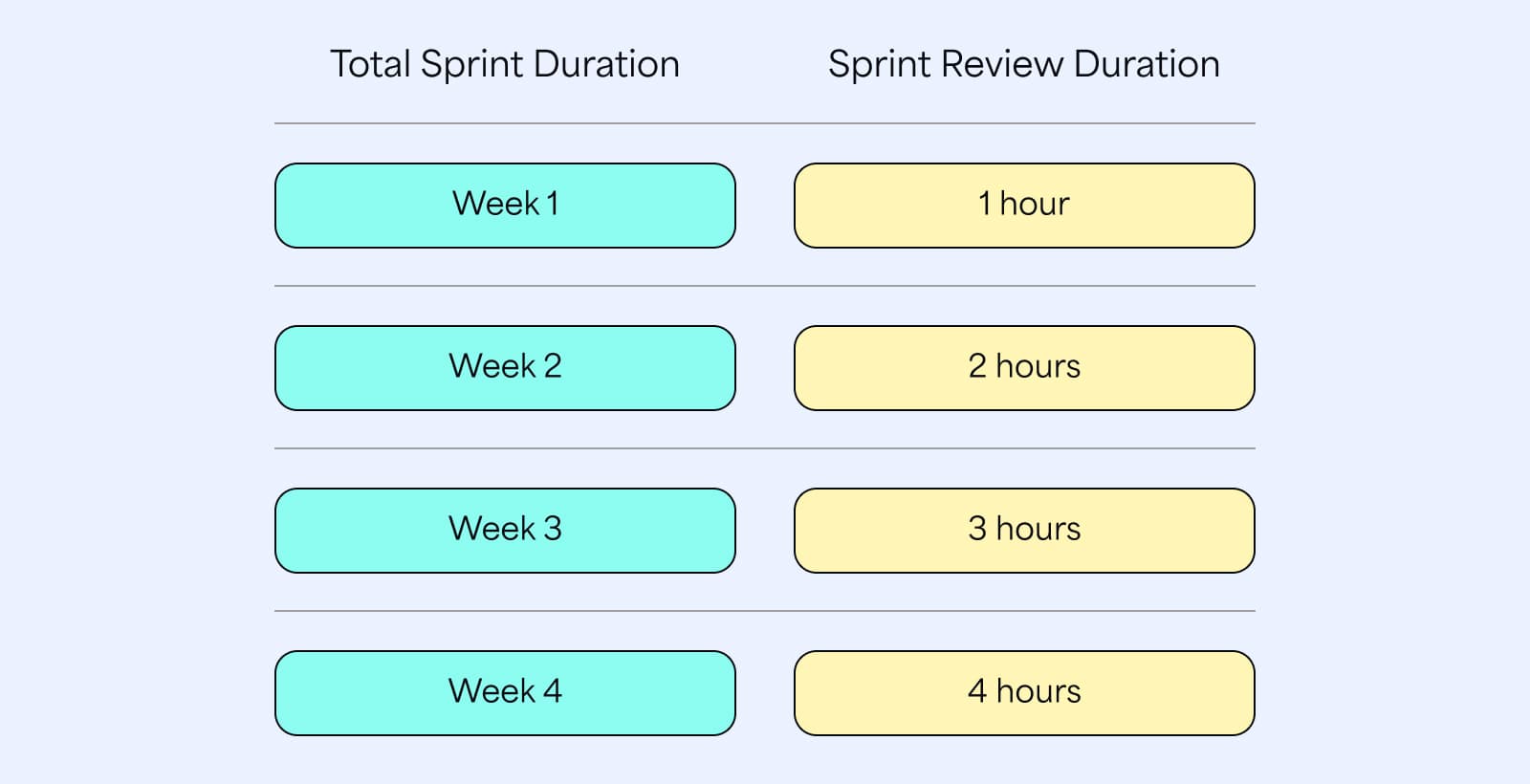
Share the increment in advance
When stakeholders see the work for the first time during the meeting, their reactions tend to be surface level. Questions focus on what they are seeing instead of what it means. Sharing the increment ahead of time gives people space to think. They can arrive with clearer questions, concerns, or ideas, which leads to more meaningful feedback during the review.
Keep the walkthrough short
Long walkthroughs leave little room for discussion. Teams may show everything they built, but run out of time to inspect or adapt anything. A focused walkthrough highlights what matters most and creates space to pause. That pause is where learning happens. It gives stakeholders time to react and teams time to adjust priorities before moving into the next sprint.
Include the full picture
Only showing finished work hides important signals. Blockers, tradeoffs, and partially completed items often explain why certain decisions were made or why priorities should shift. Including unfinished work helps everyone understand the real state of the sprint. It gives teams a clearer basis for backlog decisions and reduces surprise later.
Tell attendees what kind of input you need
When people are unsure how to help, discussion often stalls or drifts off course. Teams may get opinions that are interesting but not useful. Letting attendees know what kind of input you are looking for keeps the conversation focused. This could be feedback on priority, questions about scope, or clarification on how the increment supports broader goals.
Update the backlog during the meeting
When feedback is captured later, context gets lost. Decisions may be forgotten or reinterpreted after the fact. Updating the backlog during the review keeps learning tied to action. New ideas, priority changes, and follow-up work are recorded while the discussion is still fresh, which makes the next sprint easier to plan.
Preparing for a Sprint Review does not require more time. It requires more intention. When teams prepare with learning in mind, the review becomes a working session that shapes what happens next instead of a meeting that simply marks the end of a sprint.
How BigPicture supports effective Sprint Reviews in Jira
Sprint Reviews work best when everyone can see the bigger picture. Teams often show what they completed, but stakeholders do not always see how that work connects to goals, dependencies, or upcoming plans. BigPicture helps close that gap by giving teams a clear view of context while they stay inside Jira.
With BigPicture, teams can:
- Show sprint progress next to program goals or roadmaps so stakeholders understand how the increment supports broader plans.
- Keep everyone informed without exporting slides or updating separate dashboards.
- Highlight dependencies and blockers in real time so teams can discuss risk and next steps with confidence.
- Capture feedback and update delivery plans in the same place where the work lives.
If your Sprint Reviews feel disconnected from actual plans, BigPicture brings everything together. It helps teams share context, collect input, and make decisions that support the next sprint.
Run Sprint Reviews your team looks forward to
Sprint Reviews do not need a complete reset. They only need to return to their purpose. When teams focus on inspecting progress, collecting input, and adjusting plans, the meeting becomes more useful and more engaging for everyone.
BigPicture gives teams the structure and visibility to support those conversations and keep work moving in the right direction.
Try BigPicture for Jira today