

When deadlines are looming and there’s still a lot of work to be done, it might seem like the simple solution is to work more hours. After all, someone working 80 hours a week should be twice as productive as someone working 40 hours, right?
While overtime might seem like a quick fix to increase productivity, it actually does more harm than good in the long run. Extended hours can drain productivity, lower morale, reduce output, and even impact profits.
To understand why avoiding overtime is essential, it’s important to recognize the real damage it can cause — and why businesses often resort to it to meet goals and deadlines.
Why overtime isn’t worth it
The 40-hour workweek exists for a reason. Consider how you spend a typical eight-hour workday: you start the day fresh, hit peak productivity after a couple of hours, and maintain that pace until around hour six. By then, you start to tire and wind down.
After eight hours, you’re ready to go home, unwind, and get a full night’s sleep, so you can start the next day refreshed. The weekend gives you time to recharge fully, run errands, and connect with friends and family before the new week begins.
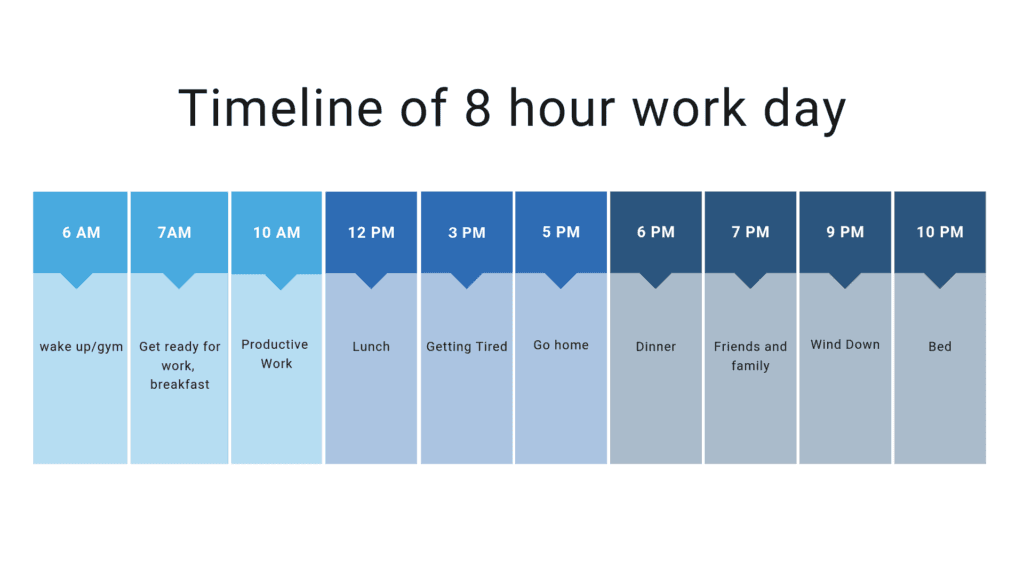
Now, compare that to a week of overtime. After eight hours, you’re already too tired to do productive work, but you still have to push through another two or three hours. You go home, but there’s not enough time to unwind or get a full night’s sleep.
The next day, you’re still tired, making it hard to be productive. As the days go on, the lack of rest compounds, and your energy continues to drain.
Eventually, this leads to negative productivity, where the exhaustion from daily overtime takes its toll and undermines your overall effectiveness.
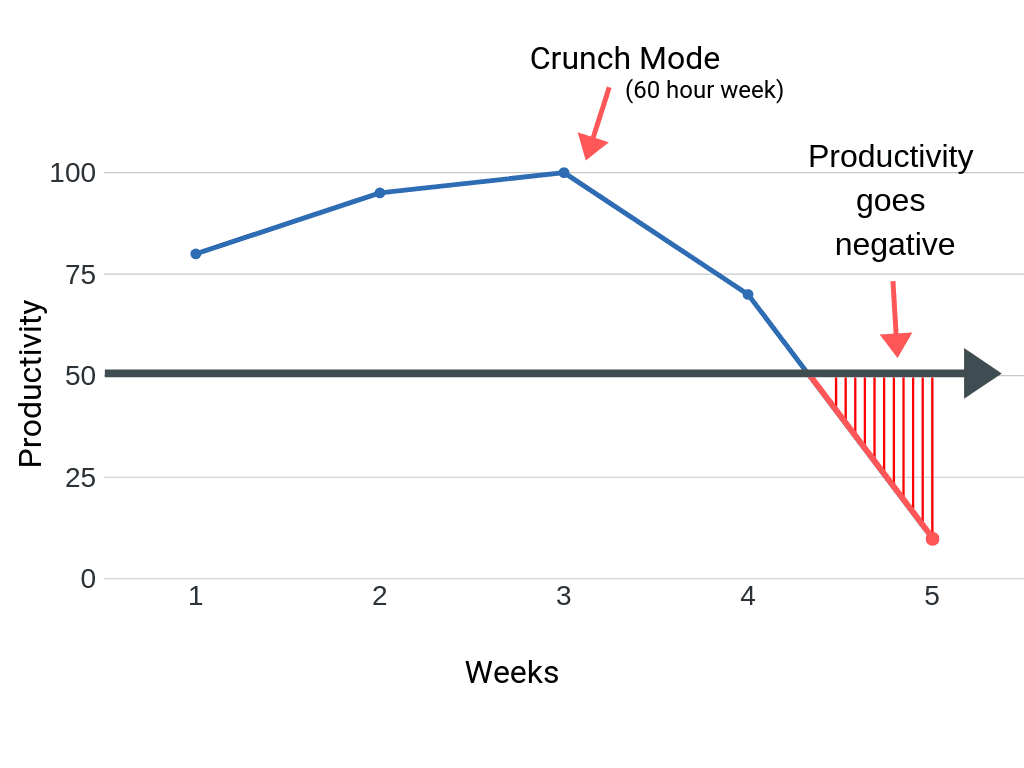
Research shows that people are actually productive for around three hours a day. Forcing your knowledge workers to spend extra hours at their desks won’t change the fact that they won’t get any more quality work done.
Paying full wages for negative productivity isn’t good for business—and it’s not the only way overtime can hurt your bottom line.
A study by Circadian found that required or regular overtime tends to decrease employee morale while increasing absenteeism and turnover. This makes it harder to recruit and retain employees, and as we know, turnover carries significant costs for businesses.
The business cost of overtime
Let’s start with the cost of employee turnover. Studies suggest that replacing a salaried employee costs 6-9 months’ salary. For someone earning $80,000 a year, that’s $40,000-$60,000 in costs to the business every time an employee needs to be replaced.
But that estimate might even be on the low end. Here are just some of the costs associated with replacing an employee:
- The cost of hiring, including advertising, screening, interviewing, and onboarding new employees.
- The time and resources spent on training and management to get the new hire up to speed.
- Lost productivity as the new employee learns the ropes — it can take more than a year for a new hire to reach the same productivity levels as an existing employee.
- The cultural impact and loss of productivity among other employees—research shows that turnover can lead to disengagement among remaining team members.
Turnover isn’t the only way overtime can cost your business. Think about trying to work when you’re exhausted. The quality of your work suffers, tasks take longer, and you’re not as efficient as when you’re fresh and well-rested.
Paying extra wages for employees who are too worn out to be productive isn’t the best use of company funds. If those exhausted employees make mistakes and have to redo work, you’re essentially paying them to do the same job twice.
Mistakes can happen at any time, but science shows they’re more likely when employees are fatigued. This means overtime not only costs more in wages but also in the time and resources needed to fix errors.
The health impact of overtime
Overtime doesn’t just hurt your business — it’s also harmful to your employees. Extensive research shows that overtime takes a significant toll on both mental and physical health.
A study published in the Journal of Social Science and Medicine found that working more than 39 hours per week is a tipping point, leading to a decline in mental health. Working more than 48 hours a week not only impacts mental health but also causes noticeable physical health declines.
Another study in the Journal of Occupational Medicine found that long work hours contribute to anxiety, depression, and poor sleep quality. Research published in Nature and Science of Sleep also linked long work hours and poor sleep quality to long-term health problems, including cardiovascular disease, Type 2 diabetes, and certain cancers.
Additionally, a study in the Social Policy Journal of New Zealand found that long work hours strain interpersonal relationships, particularly with spouses and children.
The evidence is clear: overtime is detrimental to both your business and your people. So why do managers continue to rely on it?
The real cause of overtime
There are several reasons why overtime is still prevalent, especially in the tech industry. The most significant factor is a culture that glorifies long hours. In tech, it’s known as “crunch time,” where there’s a hackathon mentality that programmers can work around the clock to meet tight deadlines.
Overtime can also result from management mistakes. One of the most common issues is not having an effective way to measure employee output. Without a clear metric for productivity, time spent in the office often becomes the default measure of success.
Additionally, if project management isn’t aligned properly, teams may be forced to complete a project in less time than it realistically requires. Most project timelines are based on historical data, but if that data is inaccurate, the timeline will be too.
Keep overtime at bay with 7pace Timetracker for monday.com
How do you break this vicious cycle? By measuring the time spent on work instead of office presence. Team members need a simple way to log their work hours.
If your organization uses monday.com to manage projects, time tracking might feel like an extra task. But there’s a way to simplify the process. 7pace Timetracker for monday.com makes time tracking and management effortless.
Team members can log time directly in their item details, allowing them to track time while updating statuses or adding comments — no extra steps required.
Better yet, multiple users can log time in the same item or subitem, helping to maintain data accuracy in collaborative environments.
And if someone forgets to log a time entry right away, that’s where My Time comes in. My Time allows team members to review, add, and modify time entries for a given week or month. Think of it as your personal time command center, where all your entries are in one place. Use it to track your time, ensure your stats are accurate, and improve your efficiency.
7pace isn’t just for team members — it’s a valuable tool for managers too. The All Times view compiles all the time entries logged by the team in a given period, providing managers with a clear view of the team’s activity across the week or month.
This offers actionable insights into how long tasks actually take, enabling managers to improve the accuracy of future planning. A more accurate schedule reduces the likelihood of overtime.
Summary
No matter the problem, working overtime is not the solution. Eliminating it completely takes time, a mindset shift, the right habits, and the right time-tracking software. But removing overtime from your organization will help both your business and your people thrive.
Adding 7pace Timetracker for monday.com does more than just help control overtime. It empowers teams to understand how they spend their time and makes it easier for them to manage it effectively.
Start my free trial