

You might not even realize that you’ve been creating portfolios since you were a kid. Think of all the different action figures, building blocks, cars, and dolls you collected throughout your childhood.
Each toy was like a different project — a teddy bear you got on your birthday is different from a plane model you bought with your pocket money. You put the toys you play with the most or find the most fun and useful on a special shelf in your room. This way, you could easily find and play with the toys that made you happiest.
In project management, project portfolios are like toy collections. They organize and track vital projects and initiatives. Portfolios help prioritize resources, align with company strategy, manage risks, and improve performance. Let’s explore the concept of the project portfolio with various examples to help you understand this concept better.
What is a project portfolio in project management?
A project portfolio is a group of individual projects and programs, each with specific goals, timelines, and resources. The organization prioritizes and executes these in a coordinated way to achieve its strategic objectives.
Portfolios provide a high-level overview that enables organizations to prioritize, manage, and track multiple projects to ensure they align with overall business goals and maximize resource use.
There are a few key components and functions of a project portfolio in project management.
Selection and prioritization
Projects are evaluated based on criteria including strategic alignment, potential return on investment (ROI), resource requirements, and risk. These criterial help you to select and prioritize projects that offer the most value to your organization.
Resource allocation
Resources (like money, personnel, and equipment) are allocated across projects within the portfolio. Effective resource management ensures that resources are used optimally and that high-priority projects receive the necessary support.
Risk management
Potential risks across all projects in the portfolio are identified upfront and managed. This helps in mitigating risks that could impact multiple projects or the overall strategic objectives.
Performance monitoring
The progress and performance of individual projects and the portfolio as a whole are monitored. Key performance indicators (KPIs) and metrics are used to track progress, identify issues, and make informed decisions.
Strategic alignment
The alignment ensures that all projects within the portfolio align with the organization’s strategic goals and objectives. This alignment helps achieve long-term success and focus on what makes the biggest impact.
Governance and oversight
Establishing a governance framework to oversee the portfolio. This includes defining roles, responsibilities, and processes for decision-making and accountability. You can use a decision-making matrix to guide and streamline these activities.
Project portfolio example
You can see different project portfolio examples everywhere you look as they touch on many aspects of our lives.
Corporate business project portfolio example
Chances are you’re a BigPicture user for Jira (or thinking about becoming one!). The BigPicture PPM app is part of the vast Appfire portfolio that consists of 170+ apps grouped based on their category, hosting platform, solution area, and ecosystem.
Government agency project portfolio example
The road you walk down every day to get your groceries is a project that’s part of the government agency’s portfolio. This portfolio also includes updating the city’s public transportation system, renovating schools, implementing a new recycling program, and launching a public health campaign.
Non-profit organization project portfolio example
Non-profit organizations often run several initiatives and campaigns globally and locally, such as disaster relief efforts in specific regions, blood donation drives, health education programs in developing countries, and fundraising events.
Scientific and tech research project portfolio example
Depending on its fields of specialization, an academic institution or national agency like NASA could be involved in several studies, such as climate change research, developing a new drug for a specific disease, an archaeological excavation, advancements in artificial intelligence, and a sociological survey on urbanization trends.
Entertainment industry project portfolio example
Film studios manage a rich content portfolio that includes feature films, documentary series, animation projects, film festivals, and merchandise development.
Regulatory and compliance project portfolio example
This type of portfolio typically focuses on the changes needed to ensure the business or organization’s continued legal operation in the coming years.
Financial project portfolio example
A financial portfolio can comprise a variety of tradable assets (stocks, bonds, commodities) and non-tradable assets (real estate, artwork, cars). Investors select their assets based on their interests, knowledge, risk tolerance, and investment goals, including their intended time frame for investment. Tradable assets are considered the core of any portfolio.
Project portfolio vs. program portfolio
After reading those project portfolio examples, you might have thought that many of those projects are unrelated and could be arranged better according to a similar theme or purpose.
That’s where the concept of the program portfolio comes into play.
A program portfolio consists of multiple programs, where each is a collection of related projects managed together to achieve specific strategic outcomes or benefits.
In contrast, a project portfolio encompasses all individual projects within an organization, focusing on aligning them with strategic objectives, optimizing resource allocation, and managing risks across the board, regardless of whether the projects are related.
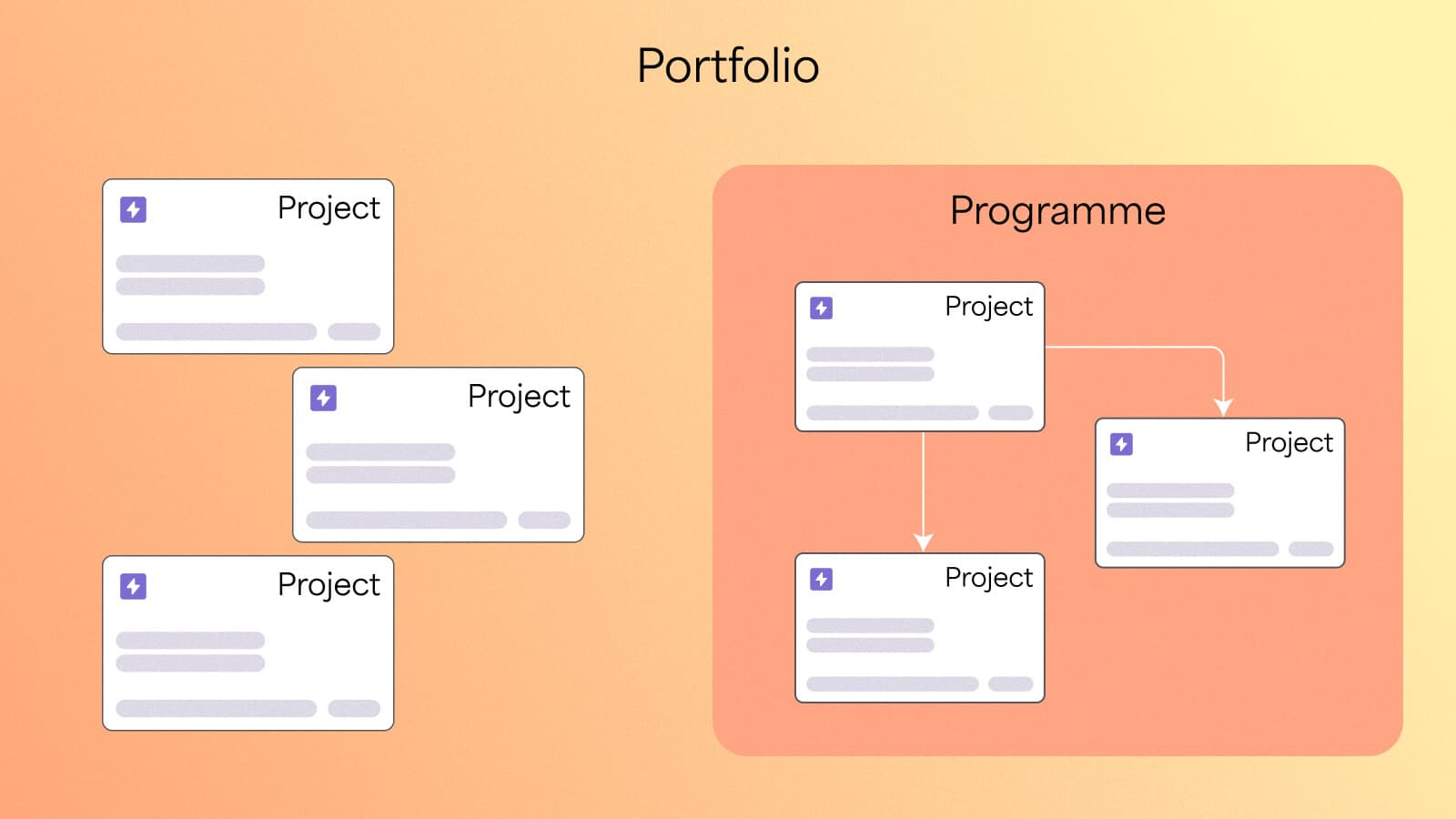
So, the key difference lies in the relationship and focus: a project portfolio manages individual projects for overall organizational alignment, while a program portfolio manages groups of related projects to ensure they work together efficiently towards common goals.
What is project portfolio management?
Introducing new projects to your organization and managing them individually is one thing. Managing the entire portfolio of projects is a whole different story.
Let’s say you want to change something in the organization at some point. You would normally start a project and follow the typical project management process in the project life cycle until the project is closed.
But when your organization is a large enterprise, and you want to change many things, you would have more than one project running simultaneously. More projects running means several–if not dozens–of project managers doing their fantastic jobs.
But at some point, they might start tripping over each other and competing for the same organizational resources. That’s when the organization needs to decide which projects are more important and will drive the most growth for the business.
If the organization doesn’t have a function that allows it to look across all the projects and make strategic decisions about prioritization, it can quickly become a problem. That’s where the roles of the Project Portfolio Manager (PPM) and the Portfolio Management Office (PMO) come in.
Who is a project portfolio manager?
A project portfolio manager (PPM) oversees a collection of initiatives, projects, and programs, selecting those that align with the organization’s strategic goals. Their role involves providing the necessary resources, skills, and capacity to ensure the successful delivery of these projects within their defined parameters.
When projects are running, a PPM continuously monitors portfolio progress and adjusts projects as needed (e.g., reallocating resources from one project to another) to keep all project plans on track.
PPMs make tough calls in response to major internal and external changes. For example, if government regulations change significantly, a top-priority project may no longer be viable.
As a result, a PPM might need to make a difficult decision to sunset one project and accelerate another, all while continuously steering the portfolio in the right direction. Their role also involves balancing risk and reward.
From PPM to PMO to P3MO
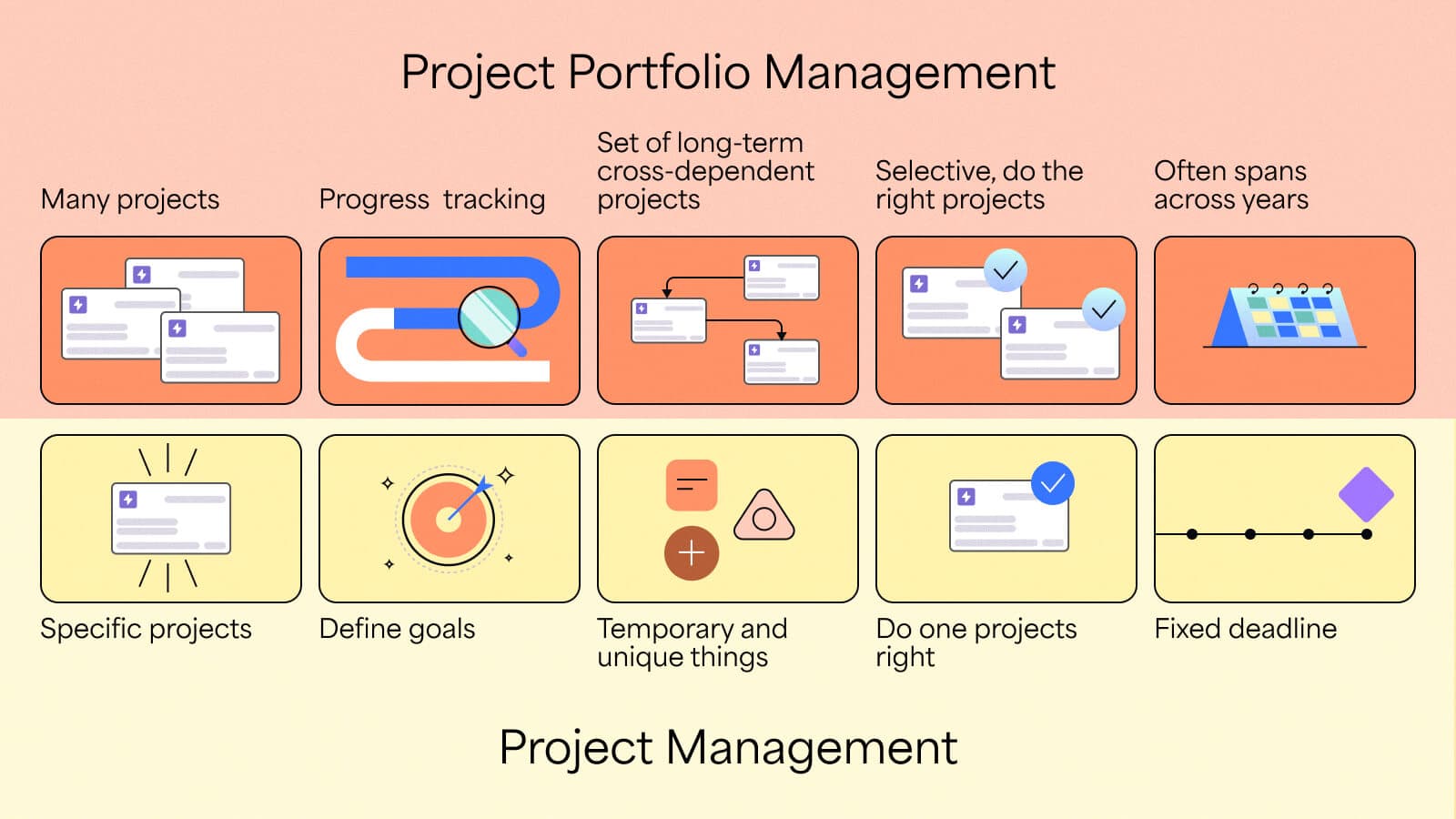
Project portfolio management means selecting, prioritizing, and controlling an organization’s projects and programs. It enables an organization to predict the future (to a certain degree) and identify the range of projects and programs worth investing in. These projects and programs, in turn, address a wide range of scenarios together.
It integrates three disciplines: strategy development, project and program management, and change management, all of which are central to the portfolio manager’s duties.
In large organizations, portfolio management is best served by a central body called the Portfolio Management Office (PMO), now often referred to as a P3MO (Portfolio, Program, and Project Management Office). This combined facility brings together skills from project management, program management, and portfolio management under one leadership.
Such a multi-skilled team can support project, program, and portfolio managers at every level. Therefore, portfolio management requires a high level of organizational project and program management maturity to succeed. This means it needs:
- an effective strategy generation process
- a strong decision-making and governance process (to choose the right projects)
- mature project and program management disciplines (to deliver and implement those projects effectively).
Key processes in the project portfolio management
Project portfolio processes encompass a series of steps designed to effectively manage a collection of projects to ensure they align with an organization’s strategic goals. The key processes include:
Identification
This initial phase involves identifying all potential projects and programs within the organization and gathering data on each project’s objectives, resources, and expected outcomes.
Evaluation and selection
Each project is evaluated based on criteria such as strategic alignment, potential return on investment, resource requirements, and risk levels. Projects are then selected for inclusion in the portfolio based on their impact on contributing to the organization’s goals.
Prioritization
Selected projects are prioritized according to their strategic impact, urgency, and resource availability. This helps in determining the order in which projects should be initiated and managed.
In a tech company (like Appfire), prioritization is based on:
- Business value
- Prioritization of requirements based on their estimated business value. The business analyst facilitates prioritization discussions and works with the team to ensure high-priority requirements can be completed within the portfolio, program, or project boundaries.
- Effort and risk
- Understand the project team’s estimates of effort and the risk of each requirement. These are important factors to consider when prioritizing projects.
- Changes in priority
- Prioritization results are not final. Factors can change, and so can requirements. The project life cycle will determine how to handle changes in priority.
- Maximizing business value
- At the portfolio level, you’ll want to prioritize and reprioritize regularly to maximize business value. Earned value concepts and principles may help implement this successfully.
- Appropriate metrics
- At the portfolio and program levels, develop appropriate metrics and baselines.
- Prioritization factors
- Requirements and other product information, such as issues or defects, are prioritized using factors such as value, cost, difficulty, regulations, and risk.
- Feasibility
- At Appfire, we use “feasibility” to prioritize projects. Understanding project complexity helps leadership prioritize the portfolio effectively. The Project Management Institute (PMI) recommends this best practice.
Resource allocation
Resources such as budget, personnel, and equipment are allocated to the projects in the portfolio. The aim is to optimize resource use, ensuring high-priority projects have what they need to succeed without over-allocating resources to lower-priority projects.
Portfolio balancing
This process ensures a balanced mix of projects in terms of risk, reward, time frame, and resource demand. It helps maintain a diversified portfolio that can withstand uncertainties and achieve a range of strategic objectives.
Monitoring and reporting
It is crucial to monitor each project’s progress and performance on an ongoing basis. Regular reporting provides insights into the portfolio’s status, highlighting any issues or deviations from the plan. This enables timely decision-making and adjustments.
Review and adjustment
Periodic reviews of the project portfolio are conducted to assess its alignment with strategic goals. Adjustments are made as needed, such as reprioritizing projects, reallocating resources, or terminating projects that no longer contribute to the organization’s objectives.
Making portfolio management easier with the right software
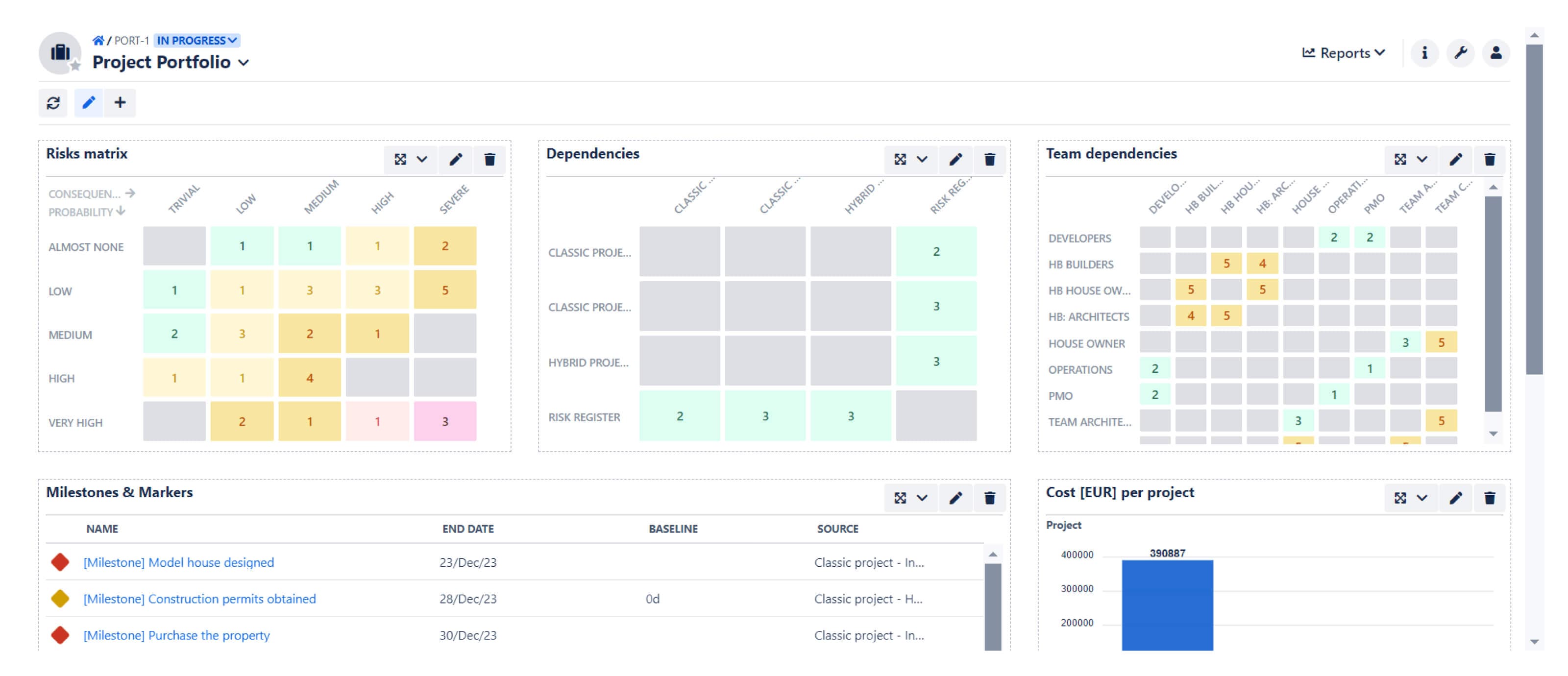
BigPicture PPM software (available for Jira) provides a suite of tools and features designed to streamline and enhance the management of project portfolios.
Centralized data and visibility
BigPicture centralizes all project data in one place, offering a comprehensive view of the entire portfolio. This visibility enables stakeholders to assess the status, progress, and health of all projects at a glance.
Resource management
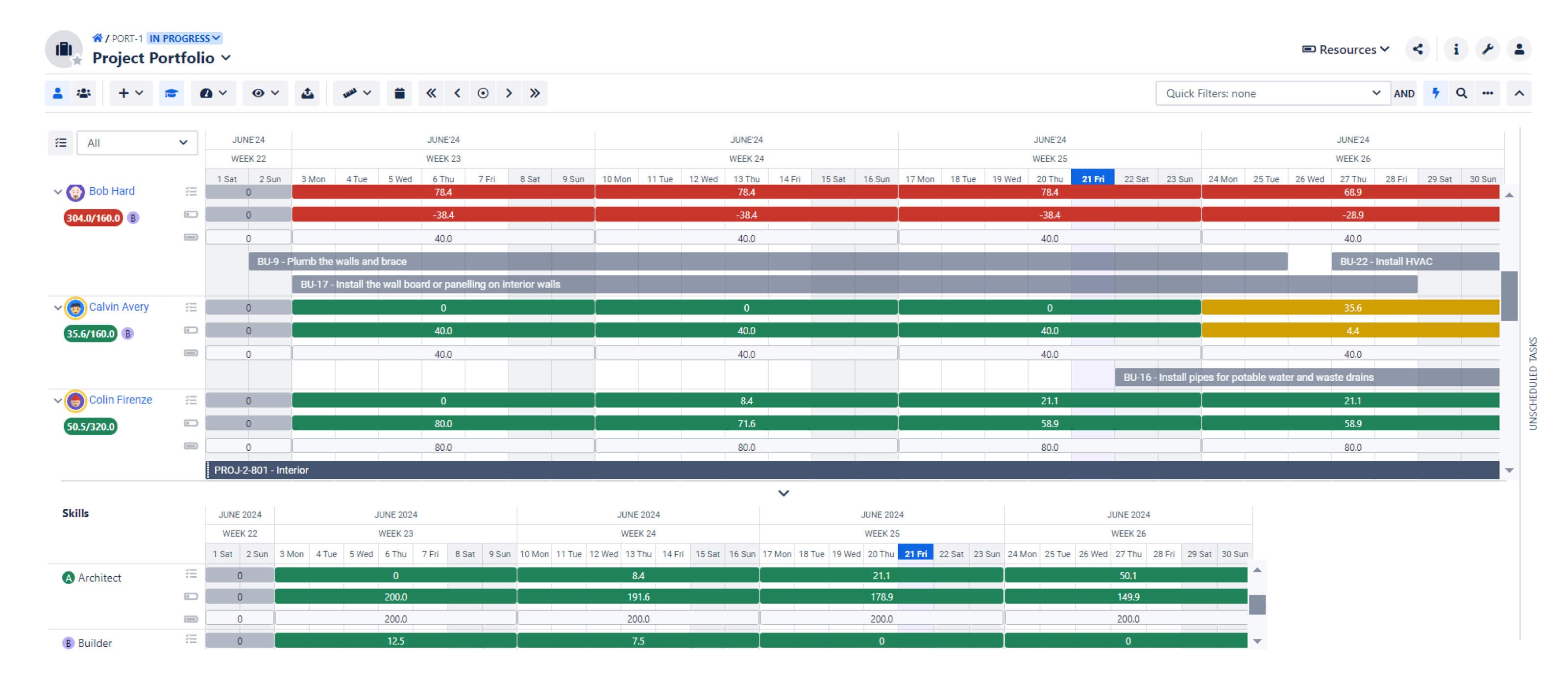
BigPicture facilitates effective portfolio resource management by providing tools to plan, schedule, and manage the workload and capacity of individuals and teams across multiple projects. It helps ensure that the right resources are assigned to the right projects at the right time, optimizing resource utilization and preventing overallocation or underutilization.
Risk management
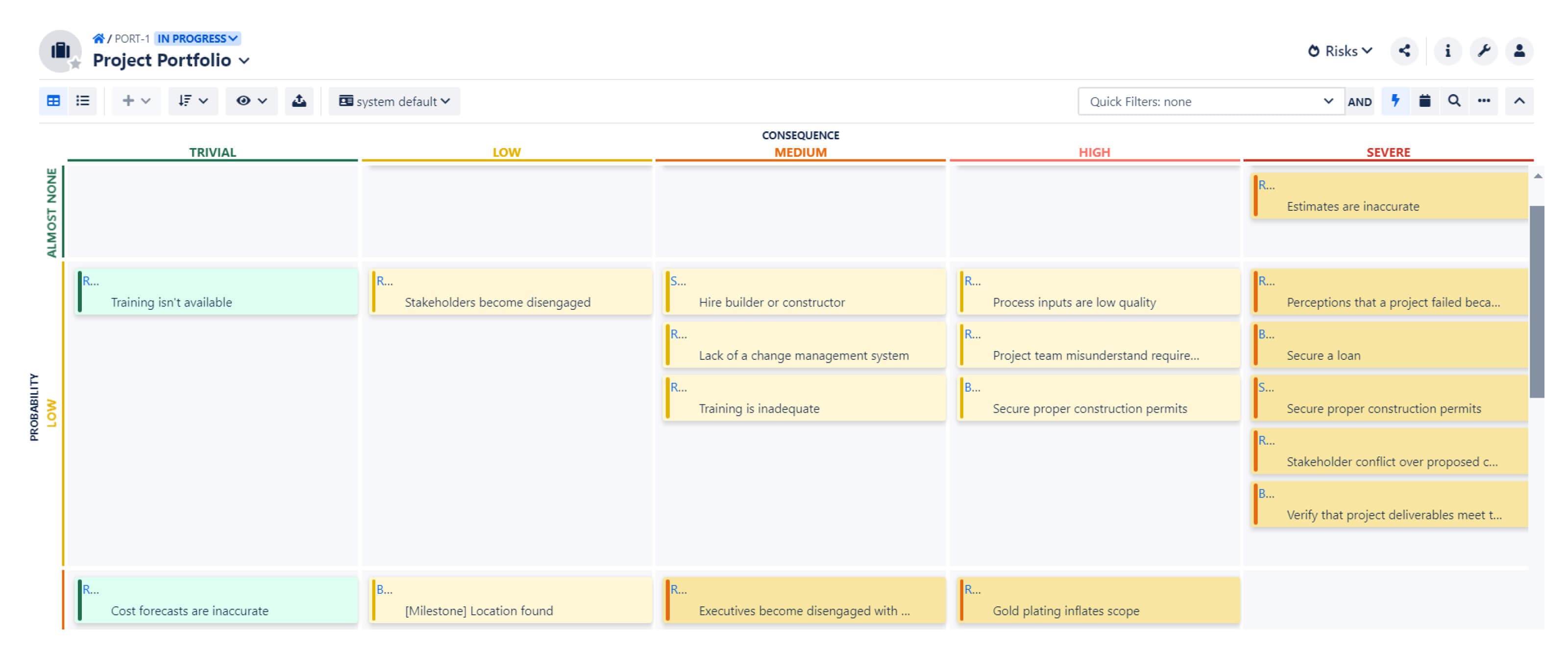
The risk management features help you identify, assess, and mitigate risks across the project portfolio. The app also aids in proactive risk planning and the implementation of contingency measures, reducing the likelihood of project failures.
Performance monitoring and reporting
Through dedicated modules and reports, you can track portfolio and individual project performance in real time. These features provide insights into project schedules, delays, tasks, dependencies, and more, enabling timely interventions and adjustments to keep projects on track.
Scenario planning and what-if analysis
BigPicture offers the scenario mode, allowing you to simulate different project schedules and resource scenarios without affecting live Jira data. You can then compare these scenarios to make informed decisions about project initiation, continuation, or termination based on potential impacts.
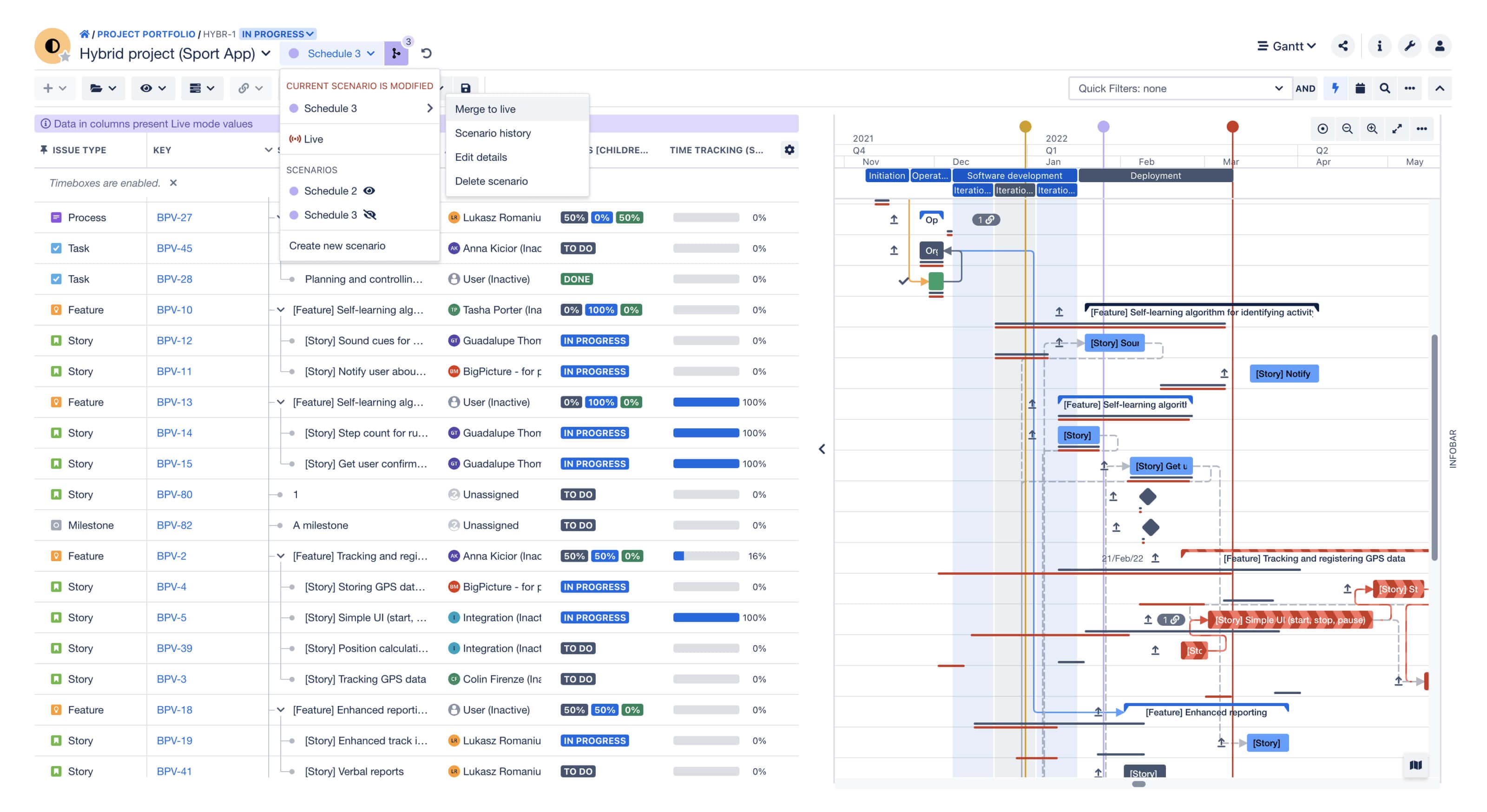
BigPicture Enterprise users can create an unlimited number of scenarios for their projects.
Project prioritization
To prioritize project portfolios, you can complement BigPicture with Foxly, another app from Appfire’s Agile solution.
Foxly calculates priority based on business value, enabling you to compare PBV (Planned Business Value) with the ABV (Achieved Business Value) directly in the BigPicture’s Objectives module.
Alternatively, you can use a numeric custom field in Jira.
Project portfolio: Wrap up
A project portfolio is a collection of individual projects and programs managed collectively to achieve strategic objectives. Effective project portfolio management involves selecting, prioritizing, and overseeing projects to ensure they align with organizational goals, optimizing resource allocation, and managing risks effectively.
A project portfolio provides a comprehensive view of all projects, helping your organization make informed decisions, balance resources, and monitor overall performance. This strategic approach maximizes value and ensures that projects contribute to the organization’s long-term success and mission.
BigPicture PPM software enhances project portfolio management by providing tools for centralized data management, resource and risk management, and performance monitoring. These features collectively ensure that projects are managed efficiently and effectively, contributing to your organization’s overall success.
Try BigPicture for free