

The ability to track project portfolio progress effectively can mean the difference between success and failure. So, how can you ensure that your portfolio isn’t just a collection of projects but actively contributes to strategic business goals?
Let’s examine portfolio progress monitoring. Learn how to set your teams up for success and track the delivery of all portfolio elements.
What is project portfolio management?
Project Portfolio Management (PPM) is an essential management practice that involves selecting and managing a collection of projects and programs to achieve strategic objectives.
The key to successful PPM is alignment with the organization’s strategic goals, ensuring each project contributes towards a common end. Unlike project-level management, PPM requires a broader perspective, focusing on group synergies, resource distribution, and strategic outcomes.
Visibility and control are critical in managing portfolios of projects. Managers need a clear overview of each project’s progress, resource allocation, and potential risks to make informed decisions that benefit the overall portfolio and, ultimately, the organization.
Laying the foundation for monitoring the portfolio
First, you’ll need to set up the right environment for your teams. This includes setting clear goals and expectations, breaking down the scope, and implementing frequent communication with project and program managers.
Establish clear objectives and metrics
Your first step in effective portfolio management is defining what success looks like for the portfolio. Set specific, measurable, achievable, relevant, and time-bound (SMART) goals.
By establishing clear metrics, you can track progress effectively and ensure all team members are aligned with portfolio objectives. Metrics might include financial targets, completion percentages of critical initiatives, or improvement metrics for operational processes.
In addition, it’s worth tracking and documenting key trends and patterns, as well as lessons learned. Create a knowledge base and keep it updated. Having a repository for important information will help you identify and implement changes sooner and maintain portfolio optimization.
Define and break down the scope
Once you’ve set your objectives, it’s time to clearly define the portfolio’s scope. This involves outlining what the portfolio will encompass, including the specific programs, projects, and strategic objectives it aims to achieve.
A well-defined scope sets the boundaries and focus for all activities within the portfolio, ensuring alignment with the overarching business goals.
Remember to establish a clear timeline. For portfolio management purposes, the timeline should include start and end dates for the entire portfolio, individual programs, projects, and each phase within them. Setting realistic deadlines for each component ensures that the portfolio progresses on schedule and stakeholders have clear expectations about when different deliverables are due.
One way to visualize your portfolio’s timeline is to use a Work Breakdown Structure (WBS). The WBS decomposes the portfolio into smaller elements, typically work packages that can be assigned and tracked. This hierarchical structure helps organize team efforts and resources more efficiently, and the timeline provides a clear roadmap for executing the projects.
Set up regular portfolio reviews
To keep a portfolio on track, implement regular, structured review meetings. These should be scheduled at consistent intervals — monthly or quarterly, depending on the projects’ pace and the nature of the business environment. Whatever frequency you decide on, stay consistent. Otherwise, you won’t get the insights you need to track your portfolio.
Reviews provide an opportunity to assess the health and progress of each project within the portfolio and ensure that the overall goals remain achievable and aligned with the organization’s strategic direction.
Ensure all the project and program managers in your portfolio attend the reviews. During the meeting, the project managers should update you on their progress and discuss any needs or issues that might impact their delivery.
Here’s a breakdown of the agenda you can use to conduct the portfolio review:
- A review of the portfolio’s overall health and alignment with strategic goals
- Updates from project managers on the status of individual projects, highlighting any deviations from the plan
- Discussion of resource allocation, ensuring that all projects have the necessary resources while identifying opportunities for optimization
- Risk assessment updates, including any new risks identified and the status of risk mitigation strategies
- Decision-making on necessary adjustments to project scopes, timelines, budgets, or objectives based on the review’s findings
Manage risks proactively
Effective portfolio management involves monitoring progress and outcomes, but also anticipating and mitigating risks. Proactive risk management involves integrating risk assessment into the tracking process, identifying potential risks early, and developing strategies to address them. This approach includes holding regular risk reviews and establishing clear escalation paths for when issues arise.
Set up change management processes
With market trends and customer demands shifting, strategic objectives are also prone to change. Implement change management processes to ensure your portfolio stays aligned with objectives.
These practices are important for organizations that have business needs to effectively manage complex and intense program and project investments. Focus on areas like portfolio components, overruns, scope, termination, and rescheduling.
Having robust change management processes enables you to react quickly yet in a controlled manner. You’re able to retain portfolio value even as strategic objectives evolve due to internal or external factors.
Monitoring the progress of your portfolio with BigPicture
Overseeing project portfolios is much more complex than managing a single project, and the stakes are higher, too.
That’s why using the right software is so important. Basic project management apps just won’t cut it. You need project portfolio management software like BigPicture.
Here are four steps that will help you keep track of the progress of your portfolios.
1. Create a detailed structure of your portfolio
To manage the entire portfolio, you need to see the entire portfolio. That means having data from all related projects and programs in one place. This level of visibility enables you to evaluate the progress of your initiatives quickly and accurately.
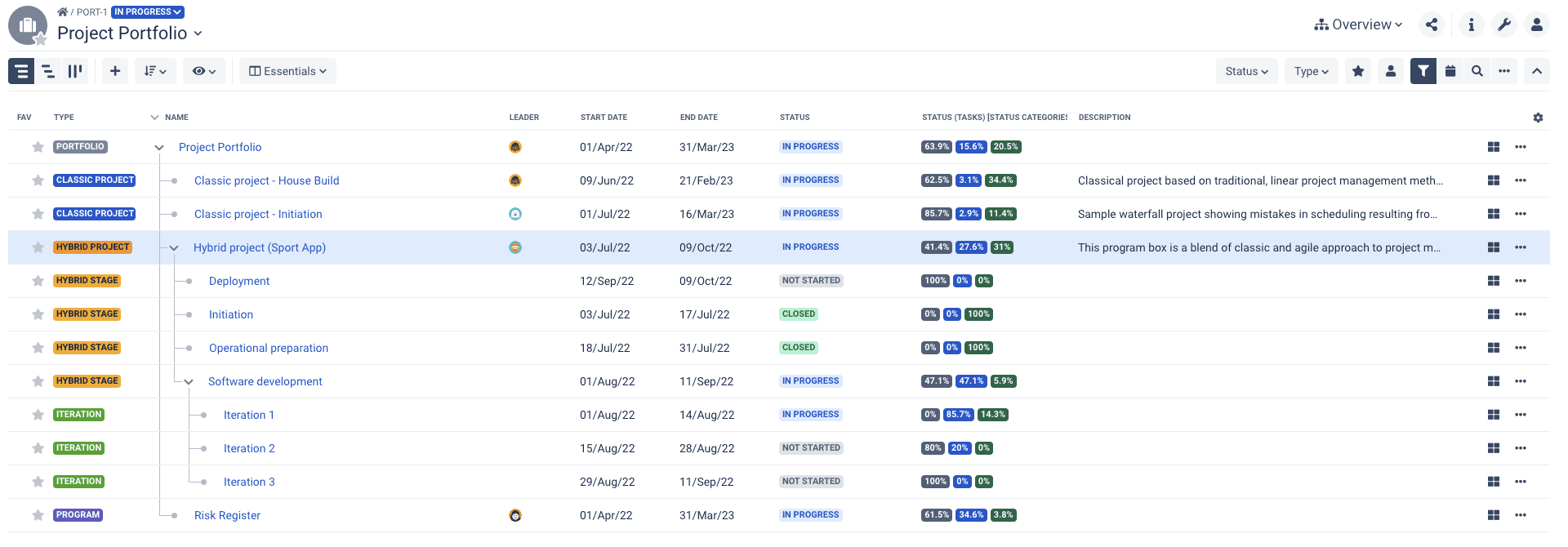
Data aggregation is key, especially for progress tracking. PPM apps like BigPicture show you the aggregated progress of the entire portfolio based on its subordinate elements. But the app also displays the progress of each initiative. And if you want to drill down a level, you can do that, too. For example, you can display the progress of a project’s phase or iteration.
2. Make sure your portfolio data is up to date
Project and program data is the foundation of portfolio management. Monitoring portfolio progress using outdated information can lead to wrong decisions or, at the very least, confusion.
On the one hand, updating the progress is not up to the portfolio manager. Every program or project relies on team members updating their statuses frequently and consistently. Managers can only ask for updates and compare the answers with what they see in the work management software teams use.
On the other hand, when team members do maintain the accuracy of progress data, you can shift your attention to using software that updates information on the portfolio level immediately. For that to happen, your PPM app needs to be fully synchronized with the software your project and program teams use on a daily basis.
BigPicture does exactly that. The app immediately reflects any changes team members make to their work items. It gives you reliable data for review meetings instead of having to ask people for updates.
3. Use baselines and estimates as benchmarks
To see if the portfolio is progressing according to plan, it’s worth comparing the execution with the original estimation. Your portfolio normally includes information like deadlines or costs.
But deadlines change, which means project or program managers modify these stats as their initiative encounters delays. The thing is, it’s hard to keep track of who changed what and what the original plan was.
However, if you use baselines in BigPicture, you have a clear point of reference to compare the progress. Even if a manager extends the duration of the project, phase, or task, you’ll still see the original estimate on the Gantt chart.
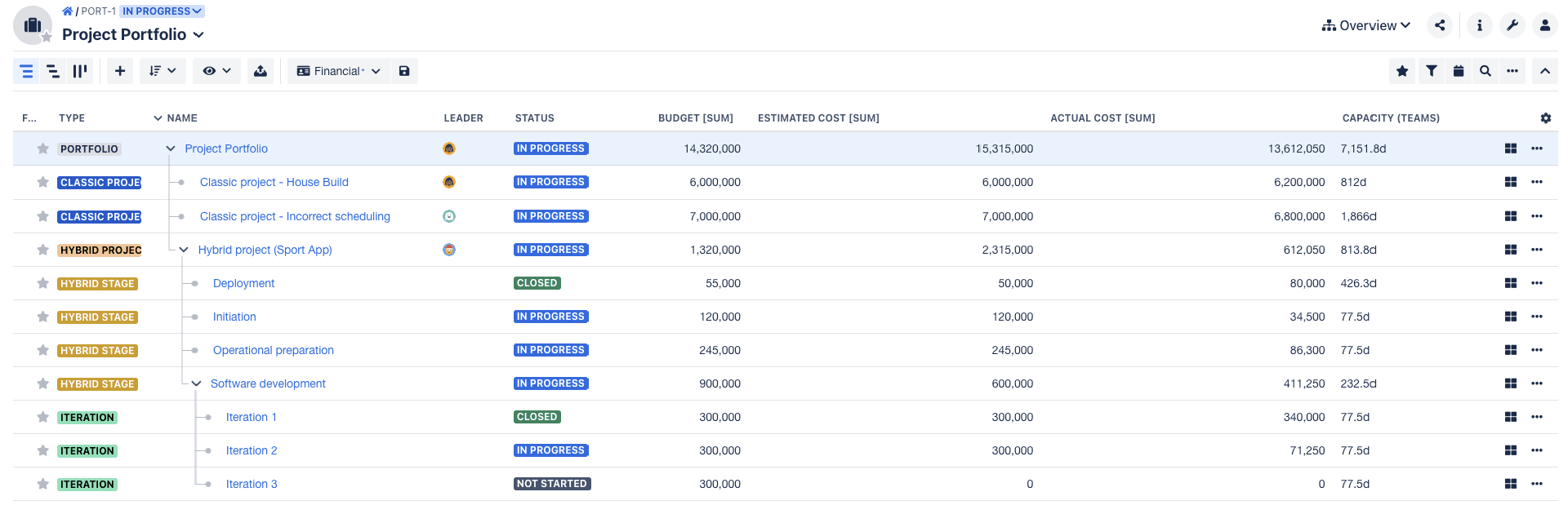
For cost management, you can use custom columns to get a side-by-side view of the differences in planned and actual spending throughout your portfolio.
4. Check resource availability and workload
There are things other than statuses that can give you insight into how well your portfolio’s doing. One of them is the workload of the teams assigned to initiatives under your umbrella. If some team members have too much on their plate, they are less likely to deliver their work on time.
In BigPicture, you can evaluate and manage the workload and availability across the portfolio. Our Resources module enables you to get insights on a team and individual level. As a result, you get a comprehensive view of your portfolio’s workload in one place.
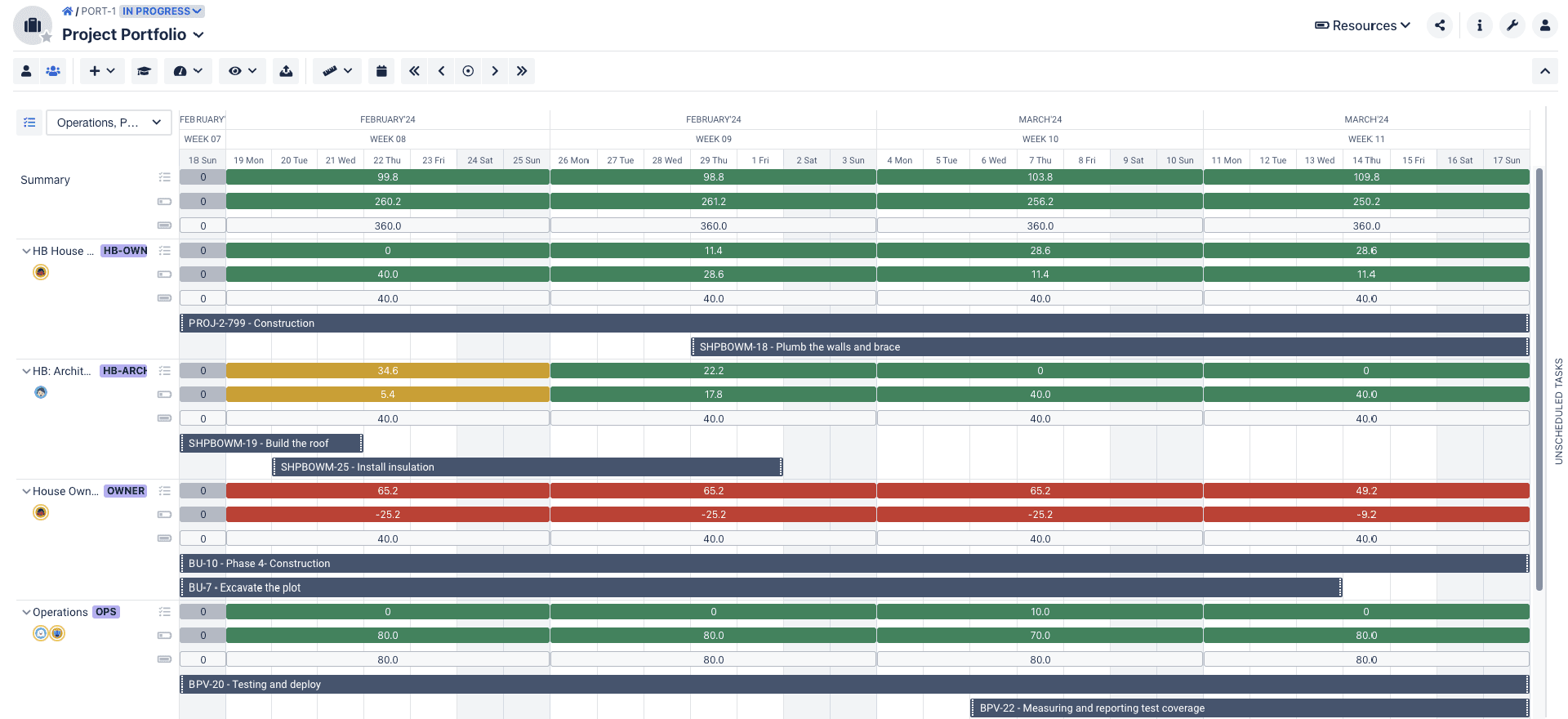
The Resources module also enables you to modify the workload of the teams assigned to the projects in your portfolio. If you see that a team or an individual has too much work, just reassign or reschedule a task using drag-and-drop or in-line editing.
Not sure who’s the best person to pick up the slack for an overloaded team member? Use the “find perfect match” feature. It will suggest the best possible replacement based on availability and skill set.
Summary
Successful monitoring of the portfolio is a combination of multiple factors:
- Clear and attainable goals
- A doable scope
- Risk management
- Frequent communication with project and program managers
- The right PPM software to support your daily efforts
While forming and cultivating the right communication or goal-setting habits might take time, getting started with PPM software is much faster.
Of course, monitoring is not the only thing this PPM app can help with. Planning, prioritizing, resource management, reporting, and risk management — you can do all that and more in one place. This enterprise-grade solution gets the job done at any size organization or portfolio, and it scales with you as you grow.
BigPicture is compatible with Waterfall, Agile, and Hybrid approaches. So, no matter what type of projects, programs, or portfolios your organization runs, this app can handle them.
Try BigPicture for free