

Imagine starting your workday, coffee in hand, ready to tackle your to-do list. You’re feeling productive and on top of your game.
But by lunchtime, it’s clear that your to-do list isn’t shrinking as quickly as you expected.
Don’t blame yourself—it's human nature to overestimate how much we can accomplish in a day. For knowledge workers, the amount of work we can realistically complete is often less than we think.
While there’s plenty of debate about how much work people can truly handle in a day, one thing is certain: almost no one can work for eight hours straight. So, how much can you really get done? Let’s explore what the science says.
How many productive hours can knowledge workers actually work?
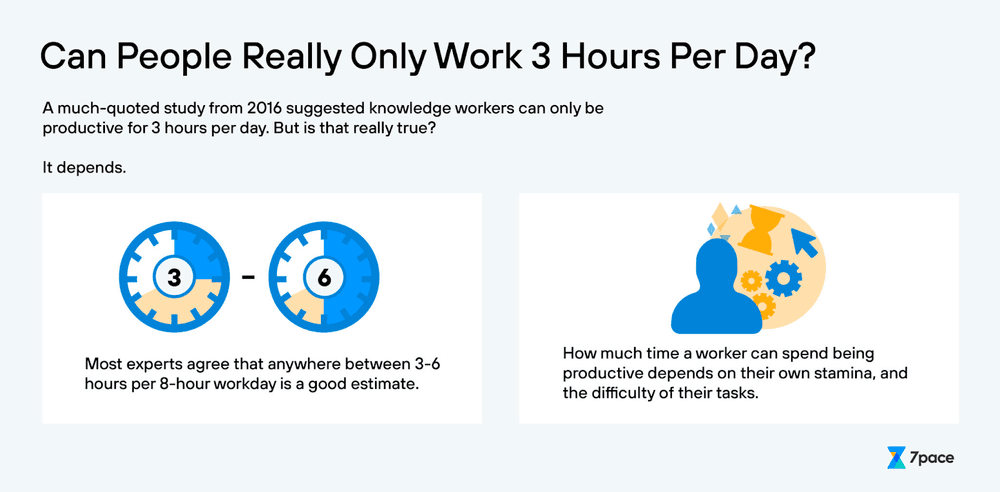
There’s a much-quoted study that shows that knowledge workers are only productive for three hours per day. But is that actually true?
It’s important to consider factors like job title, task difficulty, and stamina, which all play a role. Most experts agree that it’s unrealistic to expect anyone to work productively for eight hours straight, five days a week. Studies typically show that knowledge workers average three to six hours of productive work in an eight-hour day.
Understanding your natural limitations is key to pushing back against the always-on culture that dominates many of today’s workplaces. It can also help you become more productive. By knowing how many hours you can work effectively each day, you can better prioritize and allocate those hours to the tasks and projects that matter most.
How to track how much time you actually work
To work smarter, you need a baseline—an understanding of how many hours you actually spend working productively each day.
That’s where a time tracker integrated into your work management system comes in. An app that makes it easy to log time entries and even better if it provides insights into your productivity.
If your organization uses monday.com to manage work, tracking time and analyzing data might be challenging.
But there’s a way to change that. With 7pace Timetracker for monday.com, you can log time directly in your items and subitems. Plus, you can easily compare planned versus actual time spent on a task, enabling you to accurately assess how long tasks take and refine your time estimates.
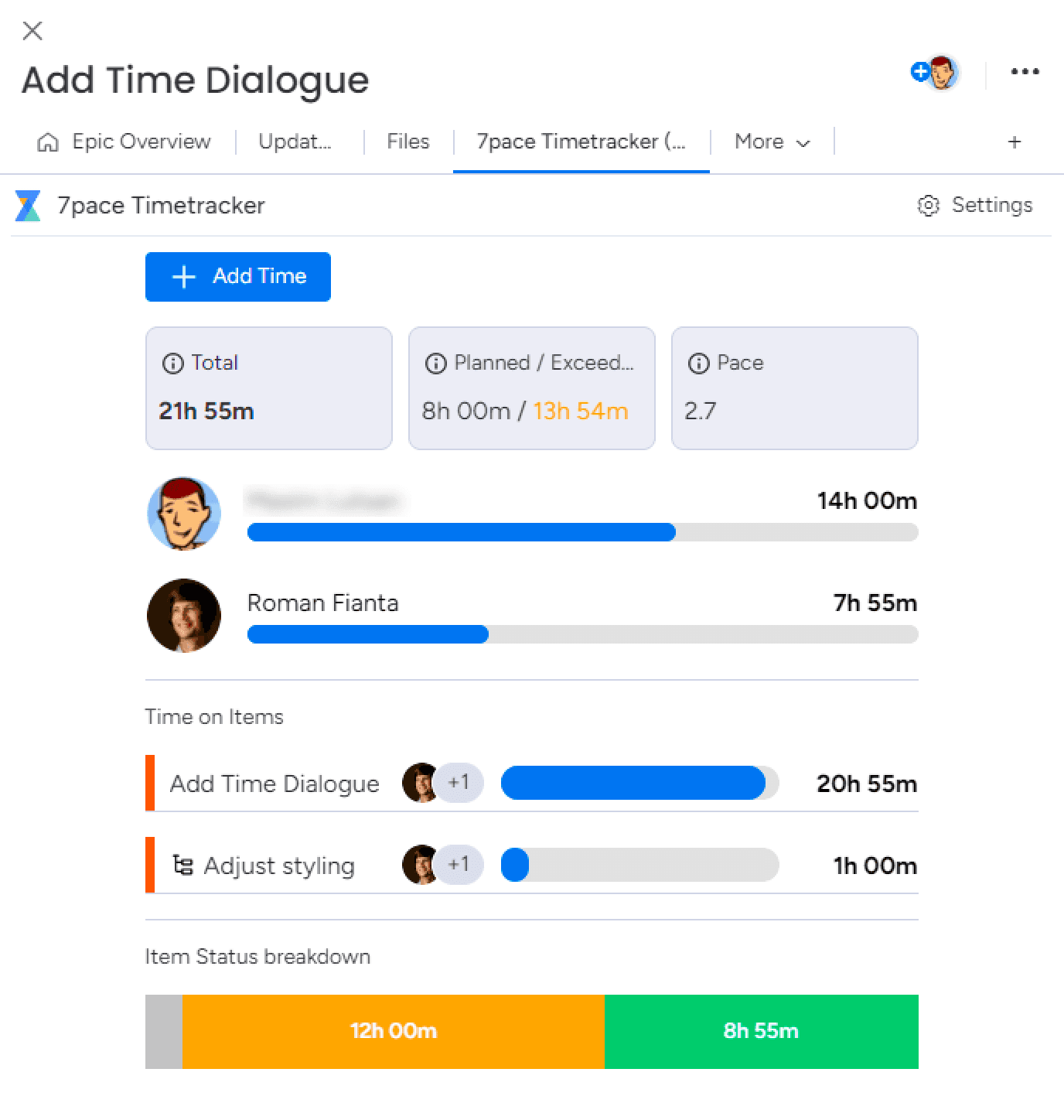
But what if you want to see a breakdown of your time stats in a larger time period? 7pace Timetracker’s My Time view was made for that.
All the time entries you log in items and subitems are captured in My Time view. Depending on your needs, you can choose between weekly, monthly, and timesheet views.
But my time isn’t just for viewing your stats. It also enables you to quickly add, modify, and remove time entries. This way, you can monitor your time stats in the context of a whole week or month. And with aggregated values, you can assess daily or weekly productivity—or even recognize if you’re working too hard and spending too many hours at work.
How to work smarter — not longer
Knowing how many hours you’re productive each day is just the starting point. But if your productivity falls between three and six hours a day, it’s unlikely you’ll be able to increase that number significantly.
To get the most out of your productive time, focus on working smarter, not longer.
Have realistic expectations
First, set realistic expectations. While it’s possible to pick up new skills that boost productivity, remember that knowledge work is challenging, and there are natural limits to how much you can do in a day. Aim for achievable goals that enhance your productivity without pushing beyond your limits.
Learn to say no
One of the biggest productivity killers is saying yes to every request. Working smarter means prioritizing your time for the most important tasks. Don’t be afraid to say no to tasks that aren’t as pressing as those already on your to-do list.
Take more breaks
It may sound counterintuitive, but taking more frequent breaks can actually help you get more done. Knowledge work is mentally demanding, and regular breaks can recharge your energy. Think of it like running a marathon—you’ll go further if you pace yourself and rest when needed.
But don’t overdo It
While breaks are essential, too many or overly long breaks can derail your productivity. Experiment with different break patterns, like the Pomodoro Technique. If the standard 25-minute work/5-minute break cycle doesn’t suit you, try longer cycles, such as 2 hours of deep work followed by a half-hour break.
Make your deadlines realistic
Setting yourself up for success means creating realistic deadlines. While short deadlines might push you to work faster, they can also lead to burnout. Set deadlines that challenge you but are still achievable.
Ask for accountability
Partnering with a colleague to hold each other accountable can boost productivity. Find a teammate with similar goals and support each other in reaching them.
Take care of your body
Maximizing productivity also means taking care of yourself. Get enough sleep, eat healthy meals, stay hydrated, and listen to your body. If you’re feeling stressed or burnt out, it might be a sign that your goals are too ambitious.
Summary
By following these tips, you’ll be on your way to maximizing your productivity each day. Remember that productivity is individual — everyone has different limits on what they can achieve.
And don’t forget, data is key. Without it, you won’t know if your productivity is improving or declining. For seamless time-tracking and valuable insights, try 7pace Timetracker for monday.com with a 14-day free trial and see the difference it makes.
Try 7pace Timetracker for free