
TL;DR
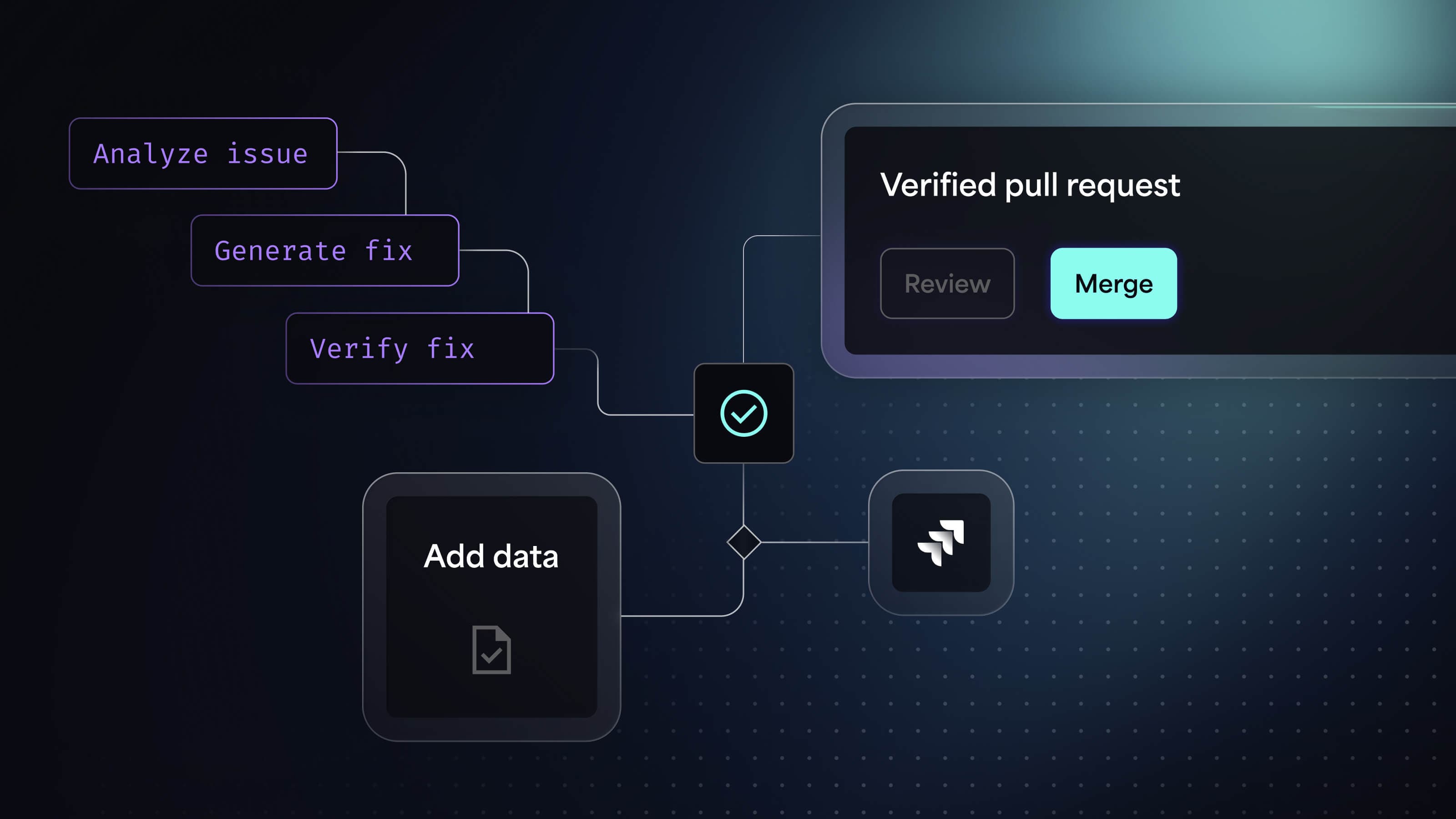
- Appfire QueueZero is a team-level AI issue-resolution workflow. It takes approved Jira work items, like bugs, refactoring, and dependency updates, and moves them toward a pull request for human review.
- Instead of each developer maintaining a personal AI setup, the team gets one repeatable path from Jira to pull request, using selected GitHub or Bitbucket repository context and, optionally, selected Confluence content.
- AI drafts the plan and the code change. Engineers approve the plan, review the pull request, and decide what merges.
- QueueZero works best on bounded, approved work with reliable context and a qualified reviewer. Judge it by completed work and human effort, not AI activity.
Everyone agrees that dependency upgrade matters. So do the refactor, the flaky test fix, and the bug that’s been “next sprint” for three sprints. They’re all approved, and they’re all still sitting in your Jira backlog, because roadmap work keeps winning the capacity argument.
Appfire QueueZero gives engineering teams a shared, human-controlled way to reduce technical debt with AI. It moves approved work items toward a pull request for engineers to review.
It’s designed to cut the effort of rebuilding context and give your team one consistent process, while engineers keep control of the plan, the code review, and the merge decisions. Your team runs the workflow; nobody hands the backlog to an autonomous agent.
Why technical debt stalls between approval and action
Technical debt is the accumulated cost of shortcuts, aging code, and deferred maintenance that makes every future change slower and riskier. Most teams know where theirs is. The harder problem is turning recognized work into responsible action.
When an engineer picks up an older or unfamiliar item, the ticket rarely tells the whole story. Before writing any code, they need to find the right repository, trace earlier decisions, inspect tests, check team conventions, and decide which documentation still reflects reality. That reconstruction effort competes with the work itself, and it’s often why approved debt stays in the backlog.
Reducing technical debt takes more than generating code faster. Teams need a reliable path from an approved work item to a change another engineer can examine, challenge, and accept.
Why individual AI coding tools don’t reduce technical debt at scale
Coding assistants and general-purpose AI can help individual developers investigate and implement work. The gap appears when every developer maintains a different mix of prompts, connectors, local configurations, and working habits.
That variation leaves engineering managers with practical questions:
- Which sources should the workflow use for a given work item?
- How does the team apply the same coding expectations on every run?
- Where does plan approval happen?
- Who reviews the proposed change and decides whether to merge it?
- How will the team compare the workflow with its current approach?
The answer is not more generated activity. It is a shared process that makes expectations and checkpoints visible.
How to reduce technical debt with AI: from Jira work item to pull request
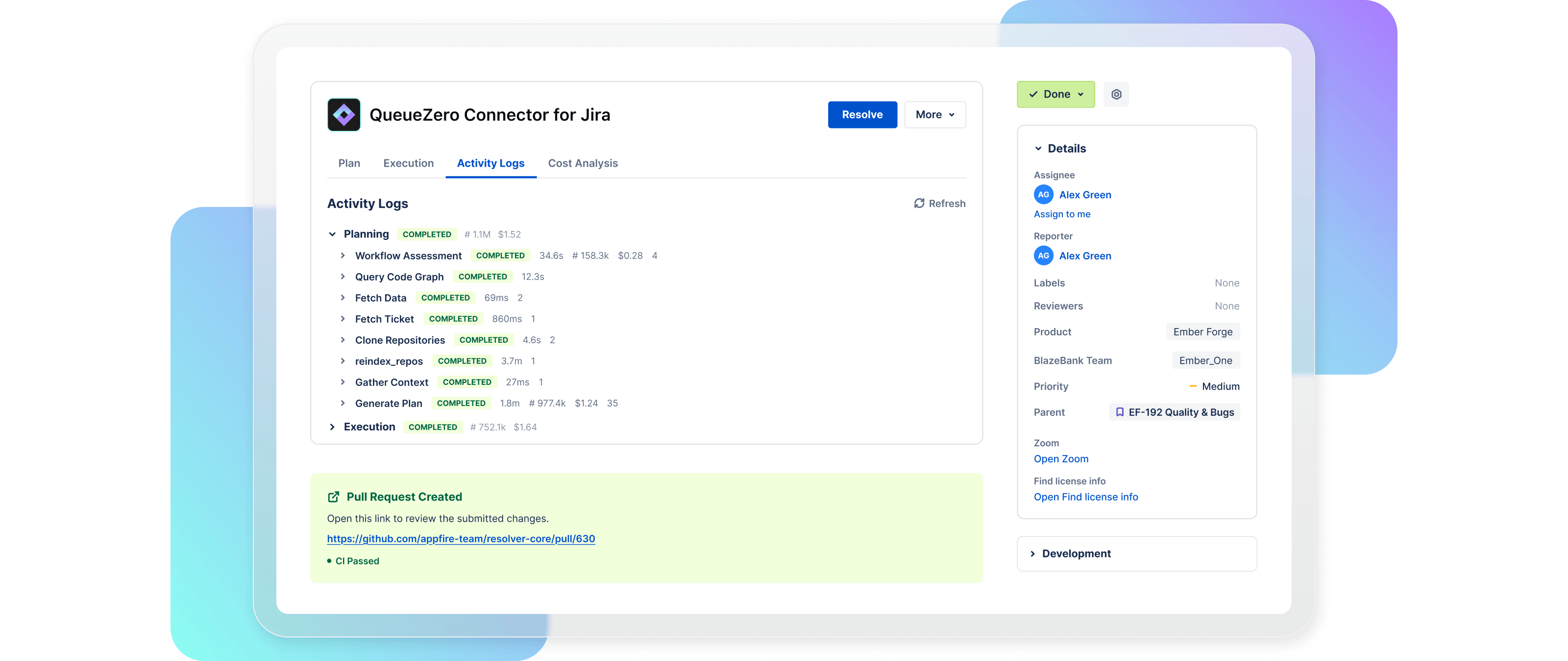
QueueZero gives the team one issue-resolution workflow with five steps:
- The app starts from an approved Jira work item.
- It brings in selected repository context and, where it’s reliable and useful, selected Confluence content.
- It creates a plan for the change.
- It generates the code change.
- It opens a pull request for human review.
For teams using Jira with GitHub or Bitbucket, that’s one repeatable route through work that’s usually scattered across systems. The outcome that matters is a responsible next step on approved work, and QueueZero supports it in three ways.
Rebuild context with less manual coordination
QueueZero brings selected ticket, code, and documentation context into the item-resolution workflow. The assigned engineer starts with a clearer view of the problem instead of searching through disconnected sources before every change.
Selection still matters. More context is not automatically better, and documentation can be incomplete or contradictory. Engineers retain responsibility for judging whether the available context is trustworthy enough to support the work.
Give the team one repeatable path
A shared workflow reduces dependence on developer-by-developer setups. The team gets a common sequence from work-item selection through planning, implementation, and review, which makes the process easier to evaluate consistently.
QueueZero guardrails can apply customer-defined coding rules on every run. Organization-level rules can be locked by administrators, while project-specific rules can reflect local needs. Guardrails support consistent agent behavior and security review. They aren’t a policy engine or a compliance control, and they don’t guarantee a secure code.
Keep engineers accountable for the result
QueueZero does not replace engineering judgment. Engineers review the proposed plan, inspect the pull request, request changes where needed, and decide whether the work should be merged.
That distinction matters. Using AI to generate pull requests is only useful when the surrounding process helps the team understand what changed and keeps approval with the people accountable for the codebase.
Choose work that gives the workflow a fair test
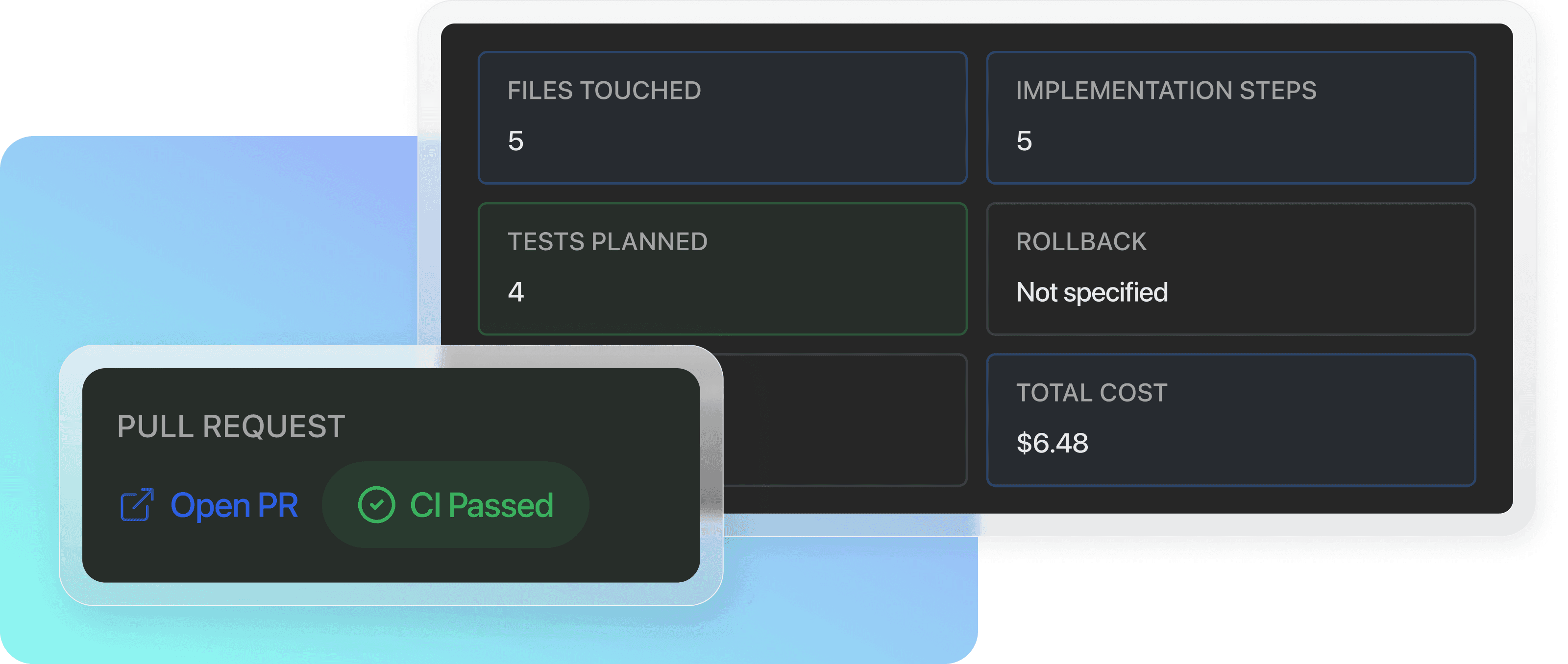
Not every backlog item belongs in an AI issue-resolution workflow. A strong first candidate has a bounded goal, enough reliable context to investigate the change, a supported system path, and a result engineers can review. A well-documented dependency update or a scoped bug fix makes a better first test than a cross-service refactor.
Before selecting an item, ask:
- Is the work approved and specific? The team should agree that the item is worth doing and understand the expected outcome.
- Can the relevant context be identified? The ticket, repository, documentation, and team conventions should provide enough reliable information to plan the change.
- Does the work fit the supported environment? The workflow starts in Jira and connects to relevant GitHub or Bitbucket repositories, with selected Confluence content as an optional knowledge source.
- Can an engineer evaluate the result? You need a qualified reviewer who can assess the plan, code change, tests, and pull request.
- Can the team compare effort fairly? Choose a baseline that lets you compare the new workflow with how similar work gets done today.
This check protects the evaluation from a common mistake: starting with a vague, sprawling, or poorly documented item and treating the weak result as a verdict on every possible use case.
Measure completed work and human effort, not AI activity
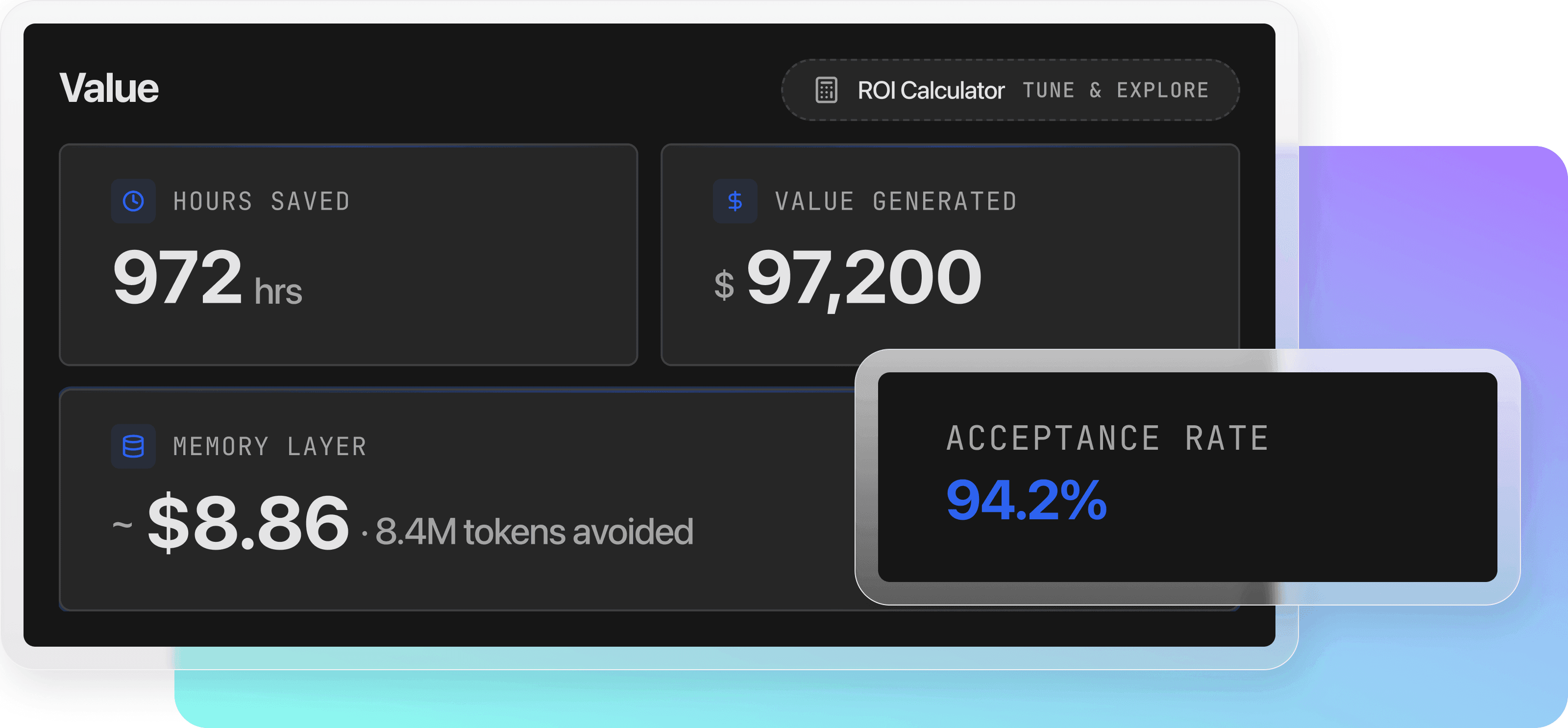
Token use and lines of generated code don’t show whether your team made useful progress. A credible evaluation ties the workflow to engineering work that reaches review or merge. Track measures that engineering leaders and reviewers can interpret:
- Elapsed time from approved work item to pull-request creation, and to merge
- People time spent on investigation, setup, implementation, correction, and review
- First-pass acceptance of the plan and pull request
- Human correction time and senior-review effort
- Test-pass rate and escaped-defect rate, where the team can measure them responsibly
- Work items merged during the evaluation
- Setup and ongoing maintenance effort compared with the current approach
Before the evaluation starts, record the same measures for a few similar items your team handled the usual way. Without that baseline, there’s nothing to compare against.
These are evaluation measures, not promised results. QueueZero should earn its place by improving completed-work or human-effort outcomes in your environment, compared with the alternatives your team already uses.
What changes when the path is shared
Appropriate engineering work no longer depends on one developer rebuilding the entire problem context and maintaining a personal AI setup before the team can act. Instead, the team has a visible, repeatable path from an approved Jira work item to a pull request.
Engineers spend their judgment where it counts: context quality, plan approval, code review, correction, and the final merge decision. Leaders can evaluate the workflow through completed work and human effort, not by AI activity.
Put one work item through the full path
Start with a bounded, approved Jira work item that has enough reliable context and a clear reviewer. Follow it from selection through plan approval and pull-request review, then compare the effort with your current approach.
Start your free trialFeatured products
