
TL;DR
- No-code rules to show, hide, or lock fields based on user roles or field values
- Speed up issue creation by removing clutter and guiding users through the right fields
- Auto-fill and conditionally require fields to keep data clean and dashboards accurate
- Built-in AI to translate text & help global teams communicate effortlessly
- Free with JMWE or Power Scripts, so you can get started instantly
Make every field feel smarter & work better for you
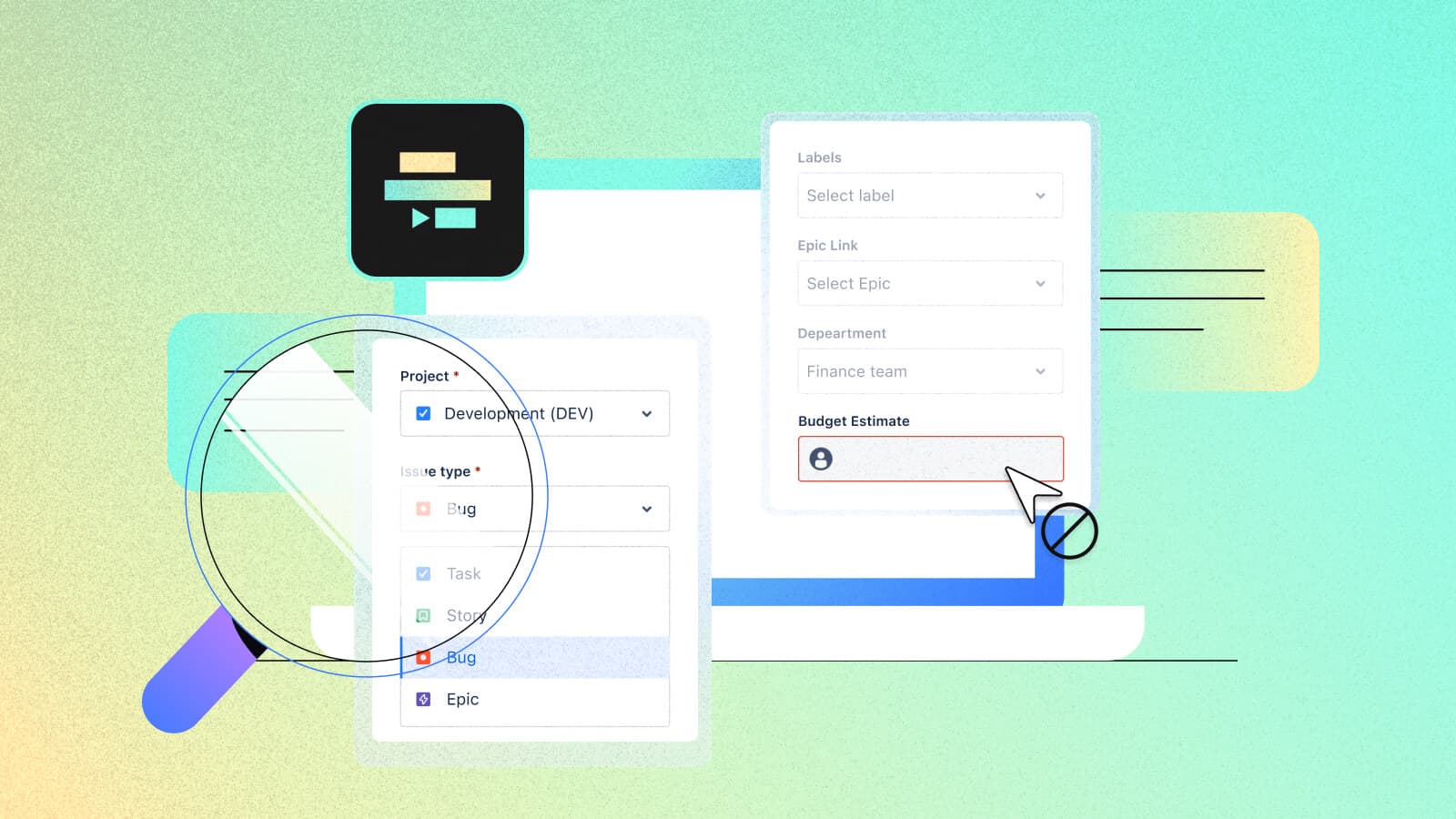
Jira and project admins know the struggle: screens cluttered with fields no one uses, dropdown menus a mile long, and teams skipping key fields that break your downstream automations. Live Fields for Jira Cloud fixes that and all without a single line of code.
Whether you're hiding irrelevant fields, pre-filling data, or setting conditions for when a field matters, Live Fields helps you simplify issue creation, reduce noise, and keep your processes clean.
And if you already have JMWE or Power Scripts, you’ve already got Live Fields — for free. Here’s how Live Fields tackles some of the most common field-management nightmares:
Common Jira headaches solved with a single rule
Solve for these common (and frustrating) Jira problems by customizing and specifying a Jira Field behavior.
| The problem | The 1-click rule customization | The payoff |
|---|---|---|
| Endless Create Issue screen | Show/hide fields – reveal a field only after a trigger value is selected (e.g., Address 2 appears when Address 1 is filled) | Users create Jira issues faster and make fewer mistakes |
| Too many fields that only matter to one team | Role-based visibility – hide or gray-out fields for groups that don’t need them (e.g., only the Marketing group sees Campaign Name) | Focused, uncluttered screens means less distraction; teams get the information that matters to their job |
| 200-item dropdown fatigue | Dynamic option filter – shrink the list of fields during issue creation in real time, based on earlier choices (e.g., if “Hardware Request” is selected, show “Device type” and “Justification”.) | Pick the right value with fewer clicks and better data quality; reports stay consistent |
| Critical fields left blank at handoff | Conditional required – make fields mandatory only when it matters (e.g. require "Impact" if Environment = Production") | No more "please update this field" ping-pong; dashboards stay accurate with follow-ups |
| Broken downstream automations due to missing data | Auto-populate on load – set default / calculated values (e.g., auto-fill Team based on project) as soon as the issue is created | Post-functions run cleanly; admins stop patching broken flows |
| Mixed-language teams misread information | AI copy-correction & translation – instantly translate field helper-text with one toggle | Teams stay aligned with easier information sharing and communication — regardless of language |
How it works
Creating a rule is simple with no scripting required (unless you want to get fancy):
- Set a context – choose where the rule applies (projects + issue type your rule should run for)
- Choose conditions – define what triggers the rule (field / value or user-role criteria to)
- Pick a template – e.g., “Hide Field” or “Make Required”
- Save & watch – See real-time updates on your issue screen
Visual builder for speed, scripts for flexibility
Live Fields meets you wherever you are on the admin curve. Start with ready-made, intuitive templates to hide, show, disable, or pre-fill fields. When a requirement pushes beyond those guardrails, switch to the built-in script editor to create more advanced logic.
New admins knock out quick wins in minutes with the visual builder, power users keep the unlimited flexibility of scripting, and both rule types live alongside your project configuration so you can test changes on the spot and roll them out instantly.
Wanna try it out?
Install Live Fields for free on the Atlassian Marketplace.
Try it free