
According to the 10th Global Project Management Survey by the Project Management Institute (PMI), about 28% of software projects failed in 2018 due to escalating costs.
Managing project costs isn't solely the responsibility of software developers. Many budget overruns stem from inadequate estimation and inaccurate forecasting, leading to unrealistic expectations from product owners.
To keep costs in check, focus on thorough initial planning and budgeting. Fortunately, there's a more practical and scientific approach to managing software development budgets. By using historical performance data, you can create more accurate project estimates and ensure better budget management.
What is budget management?
Budget management involves planning, monitoring, and controlling the financial resources of a software development project. This includes creating a financial plan, estimating costs, tracking expenses, and adjusting the plan as needed to stay within budget.
As a software development project manager, it's your responsibility to manage the budget effectively to complete the project on time and within the allocated funds.
The steps are straightforward:
- Create a detailed project plan: Break down all the tasks, the resources required for each, and the estimated costs.
- Estimate costs accurately: Understand the resources needed for each task, including personnel, equipment, and software. Consider external factors like inflation or market changes.
- Monitor expenses: Track expenses as the project progresses to ensure they align with the budget. Adjust the plan as necessary.
- Communicate with stakeholders: Keep stakeholders informed about the project’s financial status to manage expectations and ensure alignment.
- Implement cost-saving measures: If expenses exceed expectations, consider reducing scope, using more efficient processes, or finding ways to cut costs without compromising quality.
Effective cost management is essential for the success of any software development project. By planning carefully, estimating costs accurately, monitoring expenses closely, communicating with stakeholders, and implementing cost-saving measures, you can ensure your project is completed on time and within budget.
Inputs for developing a budget for software development
Creating an effective budget for an agile development project can be challenging, as requirements can change rapidly and frequently.
However, there are key considerations to keep in mind when developing a budget for an agile project. These can be categorized into three main areas:
Scope
The project scope is one of the most critical factors in setting a budget. Are you building a simple web app or sending a human to Mars? The difference is huge.
Scoping software projects is a mix of art and science. Here's a straightforward approach:
- Break down the project into parts.
- Look at historical data on time and effort for similar projects.
- Piece together the parts to form an overall scope.
- Translate that scope into a cost estimate.
There are a few additional factors to consider when building a scope, but this simple method can help you get started.
Sprint or iteration length
The length of each sprint significantly influences the project budget. Longer sprints might require more resources but can reduce overhead costs.
Shorter sprints offer tighter control at each stage but can increase planning and management expenses over the project's lifecycle.
Consider how your project team's structure affects sprint cycle costs. For instance, hourly rates for contractors versus full-time employees can impact expenses.
Project timeline
The estimated project timeline plays a crucial role in defining the scope.
Longer timelines may increase costs due to factors such as inflation, and changes in market conditions. The team structure also continues to be a factor here. Longer projects will introduce more project risks, more unknown variables, and could exponentially increase the number of dependencies involved in the project.
Parkinson’s Law suggests that work expands to fill the time allotted. So, a 6-month project with a 12-month timeline may stretch to 12 months.
This is why Agile and Scrum methodologies are favored in IT and custom software development. They help control expanding schedules and scope creep.
As the budget architect, your role is to define and limit the scope. Prioritize features with stakeholders to expedite delivery while meeting minimum requirements.
Team structure
The size of your team, their skills, and availability all influence the project budget and scope.
Interestingly, a larger team doesn’t always mean faster or cheaper completion. It can expand the scope due to increased management and overhead Plus, you have to factor in Brook’s Law, which warns that adding new members can often delay the project.
Risks, requirements, and circumstances
Lastly, you need a "fudge factor" to account for various elements that affect how the work is done and the effort required.
Consider factors like:
- Equipment and software
- Development stack
- Languages and frameworks
- Project management software and systems
Also, plan for contingencies. Is there a strategy for adjusting the project scope if unexpected changes occur?
How to create software project budgets step-by-step
The general process for building a budget starts with scoping the work and then estimating expenditures based on that scope. Here’s the workflow for software project budget planning in an Agile context.
With the scope defined, you can add layers using a bottom-up approach to construct your estimate.
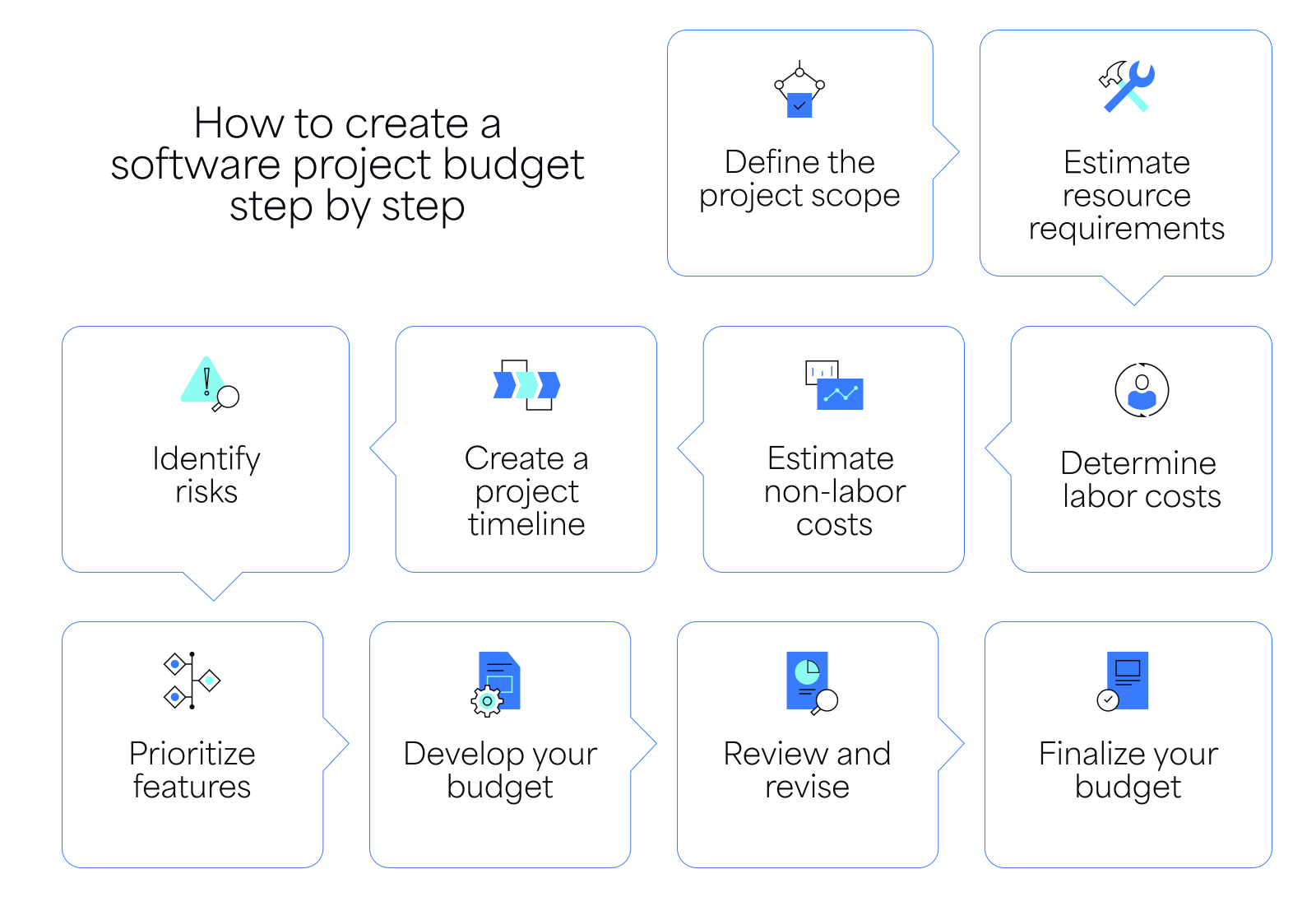
Step #1: Estimate resource requirements
Based on the project scope, start by estimating the resources needed to complete the project.
This includes determining the number and roles of team members, equipment and software requirements, and any other necessary resources.
Using a budget template can help ensure you account for all the different costs and avoid leaving out something critical.
Step #2: Determine labor costs
Labor costs will likely be the largest portion of your budget.
Once you've estimated the resource requirements, determine the labor costs for each team member, including salaries, benefits, and other labor-related expenses.
For hourly workers, contractors, or agencies, calculate their effective or actual hourly rate. Use the scope to estimate a specific number of hours based on historical time tracking data.
Then, estimate the actual costs by multiplying the number of hours by the rate.
Step #3: Estimate non-labor costs
In addition to labor costs, consider other project-related expenses such as equipment, software, travel, and overhead costs. Estimate these and add them to the budget.
For software costs, different types of estimates can be used at various stages of the scoping process:
- Ballpark estimate: A rough cost range that helps a client decide if the project fits their budget and if they want to proceed.
- Budget estimate: A more detailed cost breakdown presented with a high-level project plan. It guides strategy, identifies risks, and gives the client an idea of deliverables for a set budget.
- Statement of Work (SoW) estimate: Outlines all project activities, deliverables, costs, timelines, and a contingency plan. This is typically the final step before starting the project.
Several factors influence the cost of a software development project. These estimation models and methodologies can help manage the numbers:
- Empirical estimation technique: Uses data from previous projects and assumptions about the current project to make predictions. It relies on prior experience and team expertise. Common techniques include Expert Judgment and Delphi Cost Estimation.
- Heuristic technique: An adaptable method for making quick decisions on complex projects by addressing relationships between elements and parameters. A popular method is the Constructive Cost Model (COCOMO), which uses a regression formula based on industry data and project characteristics.
- Analytical estimate technique: Divides a task into component operations and applies a standard time or effort to each, based on experience or other sources. This should be performed by a specialist with experience in similar projects and a solid understanding of all workflows involved.
Step #4: Factor in risks and uncertainties
During the scoping phase, you likely identified uncertainties or risks that could cause resource management issues later.
Account for these by adding a line item to your budget. These line items should include specific adjustments, such as +$10,000 or a 10% variance for expected surprises. This way, potential overages are already included in your budget, reducing stress if they arise during the project.
Step #5: Create a baseline
Based on the previous steps, develop a preliminary budget for the project. This should include all estimated costs (both labor and non-labor) and any contingencies.
Use this as a sanity check. Share it with stakeholders and your project team to get feedback on areas that may be unrealistic or misaligned with the project goals.
Step #6: Review and revise
Make necessary revisions based on the feedback. This may involve adjusting the scope or timeline of the project or changing the budget based on new information or estimates.
If you have access to past project budgets, compare your new budget with the old ones. Does it align with actual costs incurred in the past, given the project's scope and scale?
Step #7: Add 10%
It's almost certain that you’ll underestimate the full costs. So, it’s best practice to add a 10% “management reserve” fund to the final cost estimate. These funds are generally kept "off the books" and only used if surprises occur.
Step #8: Finalize the budget
Once the budget has been reviewed and revised, finalize it and communicate it to all stakeholders. This ensures everyone is on the same page regarding the resources needed and helps avoid surprises later on.
Important metrics for managing software budgets in agile
As a development manager, tracking certain metrics can help you manage your project budget and avoid expensive overruns. While the specific KPIs depend on the project, here are a few common ones:
- Burn rate: This is the rate at which a team spends its budget over time. Calculate it by dividing the total budget by the total number of project days. This metric helps track spending and make necessary budget adjustments.
- Velocity: Velocity measures the rate at which the team completes work during each sprint. Calculate it by adding up the story points completed during each sprint and then dividing by the number of sprints. This helps estimate the amount of work that can be completed within a given budget.
- Budget variance: This is the difference between the actual budget spent and the planned budget. Positive variance means spending is less than expected, while negative variance indicates overspending. This metric helps identify high-spending areas and adjust the budget accordingly.
- Earned value: Earned value measures the value of work completed compared to the planned value. Calculate it by multiplying the percentage of work completed by the planned budget for that work. This helps track progress and identify areas where the team is falling behind or over budget.
- Return on Investment (ROI): ROI measures the financial return on investment for the project. Calculate it by dividing net profit by the total project cost. This helps evaluate the project's financial success and justify the investment to stakeholders.
- Cost of delay: This measures the cost of delaying the delivery of a feature or project. Calculate it by estimating the lost value from the delay, such as missed market opportunities or reduced revenue. This helps prioritize work and decide which functionalities to develop first.
Why time tracking matters during budget estimation
Time tracking is essential in Agile project budget management because it provides detailed insights into how much time is spent on each task. This information is crucial for accurately estimating the time and resources needed to complete each task and for tracking progress against the project plan.
Not all time-tracking software supports budget estimation. Thankfully, 7pace Timetracker for Azure DevOps designed with software development teams in mind. Besides logging and managing time, you can create custom budgets for each iteration or specific work items and worklogs.
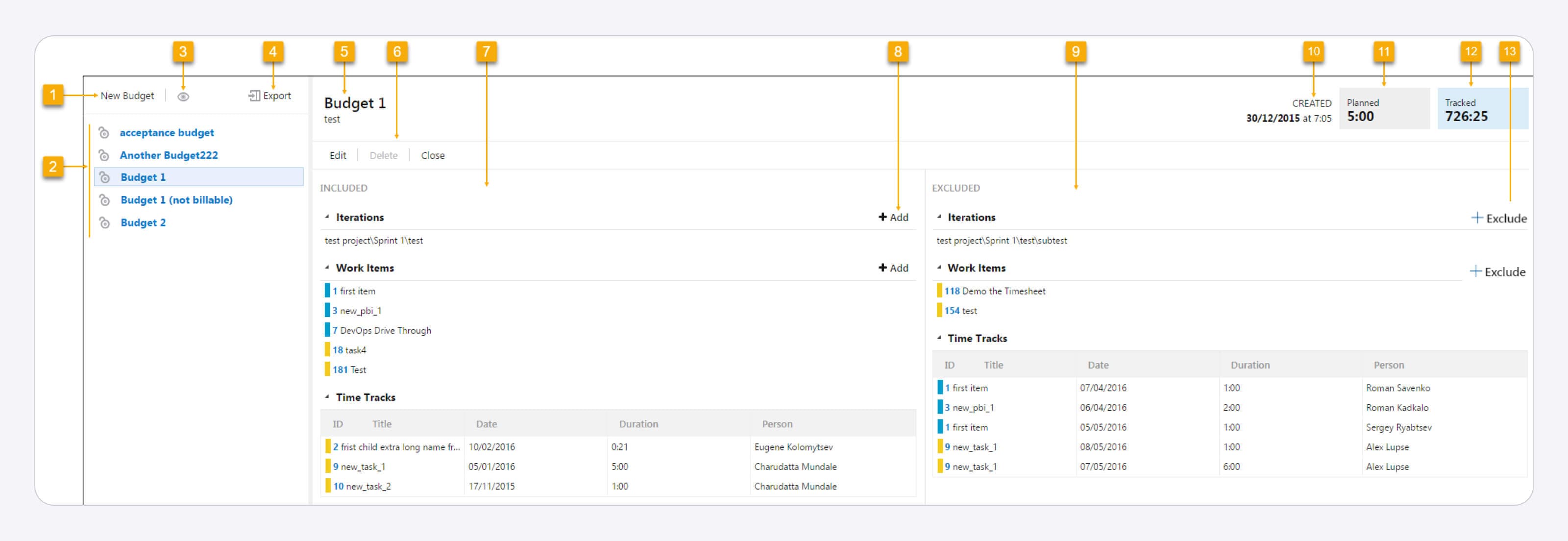
Using 7pace to track time and manage budgets allows project managers to make informed decisions about allocating resources and adjusting the budget to keep the project on track. This helps reduce the risk of overspending or running out of budget before the project is complete.
Want to see 7pace Timetracker in action? Start a free trial to see how it can improve your budget planning.
Try Appfire's PPM apps free